Showing posts with label 80's. Show all posts

Lotus Esprit

The Lotus Esprit is a sports car that was built by Lotus in the United Kingdom between 1976 and 2004, as well as a future release in 2013. The silver Italdesign concept that eventually became the Esprit was unveiled at the Turin Motor Show in 1972 as a concept car, and was a development of a stretched Lotus Europa chassis. It was among the first of designer Giorgetto Giugiaro's polygonal "folded paper" designs. Originally, the name Kiwi was proposed, but in keeping with the 'E...' naming format of Lotus tradition, the name became Esprit.

S1

The Esprit was launched in October 1975 at the Paris Auto Show, and went into production in June 1976, replacing the Europa in the Lotus model lineup. These first cars eventually became known as S1 (or Series 1) Esprits. With a steel backbone chassis and a fiberglass body, the Esprit was powered by the Lotus 907 4 cylinder engine, as previously used in the Jensen Healey. This engine displaced 2.0 L, produced 160 bhp (119 kW; 162 PS) in European trim (140 bhp (104 kW; 142 PS) in US/Federal trim), and was mounted longitudinally behind the passengers, as in its predecessor. The transaxle gearbox was a 5 speed manual unit, previously used in the Citroën SM and Maserati Merak; it featured inboard rear brakes, as was racing practice at the time. The Series 1 embodied Lotus’ performance through light weight mantra, weighing less than 1,000 kg (2,205 lb).
The original Esprit was lauded for its handling and is said to have the best steering of any Esprit. However, it was generally regarded as lacking power, especially in markets such as the United States where the engine was down-rated for emissions purposes. Lotus’ claim of 0-60 mph in 6.8 seconds and a top speed of 138 mph (222 km/h) may be thought of as optimistic - actual road test times indicated 0-60 mph in 8 seconds and a top speed of around 133 mph (214 km/h).[2]
1977 S1 (modified into "submarine" mode), as seen in the film The Spy Who Loved Me
The S1 Esprit can be distinguished from later Esprits by a shovel-style front air dam, Fiat X1/9 tail lights, lack of body-side ducting, and Wolfrace alloy wheels. Inside the car, the most obvious indication of an S1 Esprit is a one-piece instrument cluster with green-faced Veglia gauges.
The car gained fame through its appearance in the James Bond film The Spy Who Loved Me (1977) where it was featured in a long chase sequence, converting into a submarine.

S2

Second generation
Production 1979-1986
Model years 1980-1986
Engine 2.2L I4
A series of improvements made to the Esprit during its initial run culminated in the S2 (or Series 2) Esprit, which was introduced in 1978.[3] The most obvious of these changes are intake and cooling duct "ears" located behind the rear quarter window, tail lights from the Rover SD1, and an integrated front spoiler. S2 Esprits also used 14-inch (360 mm) Speedline alloy wheels designed specifically for Lotus. Other changes included relocating the battery from above the right side fuel tank (under the rear quarter window) to the rear of the car, adding an access door to the engine cover, as well as replacing the instrument cluster made by Veglia with individual gauges made by Smiths and using different style of switches on the dashboard.
During this era, special edition cars were made to commemorate Lotus's racing victories. Sharing the black and gold colour scheme of Lotus' then F1 sponsor, John Player & Sons, these cars are commonly known as the John Player Special (JPS) Esprits. Lotus' records of production figures are notoriously vague, however best estimates suggest that 149 JPS Esprits were produced.[4]
The S2.2 was produced as a stop-gap model in 1980, almost identical to the S2 but with an enlarged (2.2 L) type 912 engine used. This kept horsepower the same, but bumped up torque from 140 lb·ft (190 N·m) to 160 lb·ft (217 N·m). Importantly, the S2.2 also introduced the use of a galvanised chassis. These cars are extremely rare even among Esprits and only 88 are thought to have been produced.[1]

Turbo and S3 Esprits (1980)

Essex Turbo Esprit

In 1980 the first factory turbocharged Esprit was launched. Initially, this was another special edition model commemorating F1 ties and reflecting current sponsorship, this time in the blue, red and chrome livery of Essex Petroleum, and is therefore known as the Essex Esprit. The new turbocharged dry-sump type 910 engine produced 210 hp (157 kW) and 200 lb·ft (270 N·m) of torque. 0-60 mph could be achieved in 6.1 seconds, with a top speed of 150 mph (240 km/h).
These performance improvements were coupled to a redesign and strengthening of the chassis and rear suspension, where an upper link was added to alleviate strain on the driveshafts, along with brake improvements[5] The Essex cars introduced a Giugiaro-designed aerodynamic body kit with a rear lip spoiler, prominent louvered rear hatch, more substantial bumpers, a deeper front airdam, and air ducts in the sills just ahead of the rear wheels, which were 15" Compomotive 3-piece items. Internally, scarlet leather, combined with a roof-mounted Panasonic stereo, made for a dramatic environment.
45 Essex Esprits were built, followed by a number of non Essex-liveried but otherwise identical specification dry-sump turbo cars. Two Essex-spec Turbo Esprits - one in white and the other in copper - were featured in the James Bond film For Your Eyes Only (1981), although these were scripted as the same vehicle; the white one was blown up by an anti-burglar explosion system in Spain, while the red one was a "rebuild" of the original.By the close of 1980, Lotus were effectively building three different models of Esprit, with distinct chassis designs and body moulds - the Domestic (i.e. UK) S2.2, the Export S2.2, and the dry-sump Turbo Esprit. Introduced in April 1981, the Turbo Esprit and S3 (Series 3) Esprits marked a necessary consolidation: both new models had a common chassis, inheriting much of the configuration of the Essex cars, whilst body production was based on a single common set of moulds.
The S3 continued to use the 2.2 L type 912 engine of the S2.2, whilst the Turbo Esprit reverted to a less complex wet-sump lubrication system, retaining the power and torque outputs of its dry-sump predecessor. The interior for both cars was revised and featured new trim; combined with changes to the body moulds this resulted in more headroom and an enlarged footwell.[5] Externally, the Turbo Esprit retained the full aerodynamic body kit of the Essex cars, and featured prominent 'turbo esprit' decals on the nose and sides; the S3 gained the more substantial bumpers, yet retained the simpler sill line and glazed rear hatch of the S2.2 body style. Both models were supplied with 15" BBS alloy wheels.
In April 1986, the final incarnations of the Giugiaro-styled Esprit were announced, with raised engine compression giving rise to their 'HC' moniker. This increased the output of the naturally aspirated engine to 172 hp (128 kW; 174 PS) and 160 lb·ft (220 N·m) for the Esprit HC, and to 215 hp (160 kW; 218 PS) and 220 lb·ft (300 N·m) for the Turbo Esprit HC, with the increased torque available at a lower rpm.[7] For markets with stringent emissions requirements, Lotus introduced the HCi variant, teaming the higher compression engine with Bosch KE-Jetronic fuel injection - the first fuel-injected Esprits.
In 1987, a new version of the Esprit was unveiled, incorporating rounder styling cues given by designer Peter Stevens of McLaren F1 fame. A new Lotus patented process was introduced to create the new body, called the VARI (Vacuum Assisted Resin Injection) process, which offered more advantages than the previous hand laid process. Kevlar reinforcement was added to the roof and sides for roll-over protection,[8] resulting in an increase of the Esprit's torsional rigidity by 22 percent.[9] Giugiaro is said to have liked the restyling, claiming it was perhaps too close to his original design. The Stevens styled cars retained the mechanical components of the previous High Compression Esprit and Turbo Esprit, but introduced a stronger Renault transaxle, which necessitated a move to outboard rear brakes. However, the MY 1988 North American Esprit Turbo kept its Citroën SM type transaxle used in the previous model year. The car's Type 910 engine retained 215 bhp and 220 ft-lbs, but decreased its zero to sixty from 5.6 seconds to a varied time between 5.4[10] - 5.1[11] seconds and a top speed of over 150 mph. The exterior style changes were accompanied by a freshening of the interior, allowing a little more space for the occupants. The Stevens styled Esprit is often known by its project code of X180.
In 1989, the Esprit was again improved with the addition of a water to air intercooler, which Lotus has named the Chargecooler,[12][13] producing the SE (Special Equipment). This inline-four engine was known as the Type 910S. Horsepower was pushed up to 264 with 280 available on overboost and zero to sixty miles per hour times reduced to 4.7 seconds with a top speed of over 160 mph (260 km/h).[14] Several modifications were made to the body kit as well, like side skirts which are parallel to the body, five air ducts in the front air dam, wing mirrors from the Citroën CX and the addition of a rear wing.
Along with the SE, Lotus produced the little seen Esprit S, a midrange turbocharged car offering fewer appointments and 228 hp (170 kW), as well as the standard turbo still offering 215 hp (160 kW). The N/A and turbo were cancelled after 1990, and the S in 1991.
In 1993, another exterior and interior revamp of the car resulted in the S4 which was the first model to include power steering. The exterior redesign was done by Julian Thompson,[18] which included a smaller rear spoiler placed halfway up the rear decklid. Other major changes were to the front and rear bumpers, side skirts and valence panels. New five spoke alloy wheels were also included in the redesign. The S4 retained the same horsepower as the SE at 264 hp.
The S4 was succeeded in 1995 by the S4s (S4 sport), which upped power to 300 bhp (224 kW; 304 PS) and 290 ft-lbs of torque, improving all-around performance while retaining the comfort of the previous version. Top speed was increased to 168 mph, skidpad increased to 0.91g, an increased slalom of 61.7 mph[19] and a 0-60 mph time of 4.6 seconds.[20] Although the engine kept its 2.2 liter capacity, many modifications were added to improve engine performance. Some of the changes were enlarged inlet ports, cylinder head modifications, a re-calibrated ECM and a revised turbocharger.[21] The most visible external styling changes was the addition of a larger rear wing taken from the Sport 300.


This car was to be the end of the line for the Esprit but a cancelled project for a front engine car had left Lotus with a compact V8 and no car to put it into.

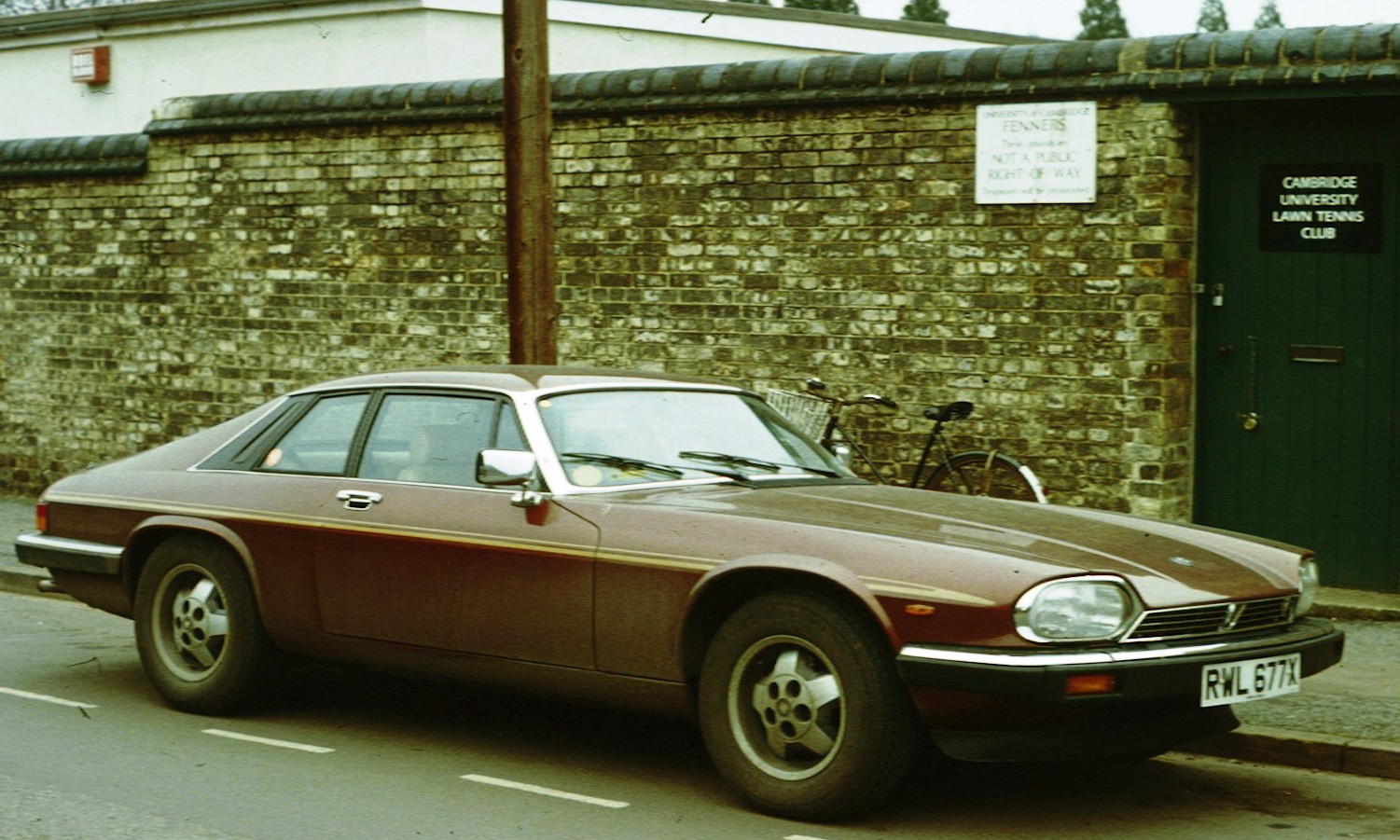
Jaguar XJS

The Jaguar XJ-S (later the Jaguar XJS) is a luxury grand tourer produced by the British manufacturer Jaguar from 1975 to 1996. The XJ-S replaced the legendary E-Type (or XK-E) in September 1975, and was based on the XJ saloon. It had been developed as the XK-F, though it was very different in character from its predecessor. Although it never had quite the same sporting image, the XJ-S was a competent grand tourer, and more aerodynamic than the E-Type.[3] The last XJS was produced on 4 April 1996, by then 115,413 had been produced during a 21-year production life. The model was replaced by the XK8.
The first XJ-S appeared in 1975 as a 1976 model. Power came from the Jaguar V-12 petrol engine with a choice of a manual or automatic transmission, but the manual was soon dropped. V-12 automobiles were unusual at the time, with notable others coming from Italian luxury sports car makers Lamborghini and Ferrari. The specifications of the XJ-S compared well with both Italian cars; it was able to accelerate to 60 mph (97 km/h) in 7.2 seconds and reach 150 mph (240 km/h). The first series of XJ-S cars had a Borg-Warner Model 12 transmission with a cast iron case and a bolt-on bell-housing. In 1979 GM Turbo-Hydromatic 400 transmissions were fitted. The TH400 transmission was an all aluminium alloy case with an integrated non-detachable bell-housing.
Jaguar's timing was not good; the car was launched in the wake of a fuel crisis, and the market for a 5.3 litre V12 grand tourer was very small. The styling was also the subject of criticism, including the buttresses behind the windows. German authorities feared these would restrict rearward vision, and refused to give the model (along with a similarly adorned contemporary Lancia model) type approval: it was for a time necessary instead for German XJS buyers to obtain type approval for each individual car when registering it.[4] Such fears were ill founded, since in reality the rear visibility was very reasonable, with only the frontmost top edges of the buttresses being visible, when looking rearward.
Jaguar did seize promotional opportunities with the television series The New Avengers and Return of the Saint. The New Avengers featured Mike Gambit (Gareth Hunt) who drove an XJ-S. Return of the Saint saw Simon Templar (played by Ian Ogilvy) driving an early XJ-S with the number plate "ST 1". Miniature versions were made by Corgi and proved popular. A decade and a half before, Jaguar had turned down the producers of the earlier Saint series when approached about the E-type; the producers had instead used a Volvo P1800.
Responding to criticisms that the XJ-S was not a worthy E-type successor, Pininfarina revealed a sporty show car in 1978 based on XJ-S mechanicals and called Jaguar XJSpider.[5] The car never went into production.

6-cylinder version and a convertible

In 1983, a new 3.6 litre engine débuted Jaguar AJ6 engine I6, as well as a new cabriolet version, the XJ-SC. In the XJ-SC, the coupé's rather small rear seats were eliminated making it only a 2-seat car. The XJ-SC was not a full convertible but had a non-removable centre targa-type structure and fixed cant rails above the doors. The rear quarter windows remained as well.
Between 1983 and 1987 the 6 cylinder engined cars were only available with a 5-speed manual transmission (Getrag 265), with a 4-speed automatic (ZF 4HP22) offered from 1987 onwards (along with improved fuel injection as used on the XJ40). The earlier, manual models were not imported by Jaguar into the United States, which had to wait until the facelift manual 4 litre XJS coupé and convertible were available; even then they were sold only in low numbers. A limited number of earlier 5-speed AJ6 cars did however enter the US as grey market personal imports.[citation needed]
A V12 XJ-SC emerged in 1985.

1991–1996

The car was re-engineered in 1991 and renamed XJS. All XJSs from this time are referred to as "facelift" models. The rear side windows appeared enlarged (although the body glass aperture was actually the same size as the earlier car), and the buttresses stayed, as designer Geoff Lawson argued that they were part of the car's character. The car got a new 4 litre version of the AJ6. In 1992 a 4 litre convertible was added to the range. The V12's capacity was enlarged to 6 litre in May 1993 (227 kW (304 hp)). At the same time the car benefited from a revision to the rear brakes, they were now fitted with outboard rear disc brakes, instead of the more complicated inboard items on previous models. With the introduction of the 6.0 litre V12, the transmission was also updated to a GM 4L80E with a 4th gear overdrive, whilst the automatic 4 litre models continued with the electronic ZF4HP24E transmission. A 2+2 convertible was also introduced, as was a customised insignia line. At the same time the car received more aerodynamic front and rear bumpers. 1992 thru 1994 were the only years the 6-cylinder with 5-speed manual transmission XJS was exported to the United States. Exact production figures are unknown, though it is likely there are fewer than ten.
In April 1994 substantial revisions were made to the 4 litre AJ6 engine which became the 4.0 litre AJ16 with coil on plug ignition being amongst the most noticeable of the changes. In 1995, the final specification changes were made and the car was referred to as the Celebration model to celebrate the 60th year of the Jaguar company. Celebration cars are easily identifiable by the diamond turned wheels, Jaguar embossed seats and distinctive wooden steering wheel. These latest cars are the most desirable of all the later XJSs, especially the convertibles. The 6 litre V12 had all but disappeared by this time and was only available during the last year of production by special order. The car was discontinued in 1996, after 21 years in production. It was replaced by the XK8.

Motorsport

For 1977, the "Group44" racing team had a very successful season in Trans Am with a race car based on the actual production XJ-S chassis and running gear. The team won the series' 1977 drivers' championship cup for Bob Tullius but missed winning the manufacturer's title by two points (only one Jaguar was competing in the Trans-Am series compared to many more Porsche entrants). In 1978, a purpose-built tube-frame "silhouette" style XJS race car was constructed which greatly reduced the weight compared to the full production chassis car campaigned in 1977. This silhouette car had only the production car's roof panel as the sole piece of factory XJS sheetmetal on the car. Group 44 succeeded in again capturing the driver's championship for Bob Tullius and also captured the manufacturer's title as well, by entering Brian Fuerstenau driving the 1977 car at some venues to gain additional manufacturer's point for Jaguar. The silhouette car survived and has surfaced recently in the SVRA historic sports race series. The 1977 factory chassis race car is believed to still be in the hands of Group 44's Bob Tullius.
In April 1979 a Jaguar XJS driven by Dave Heinz and Dave Yarborough was entered into Cannonball Baker Sea-To-Shining-Sea Memorial Trophy Dash, widely known simply as the Cannonball Run. They completed the 2,863 miles (4,608 km) from New York to Los Angeles in a record time of 32 hours and 51 minutes, a record that stood for 4 years, until it was beaten by David Diem and Doug Turner in a Ferrari 308. Diem and Turner covered the same distance in 32 hours and 7 minutes on the US Express, an unofficial successor to the Cannonball Run.[9]
In 1984 Tom Walkinshaw captured the Drivers’ title of the European Touring Car Championship with a Group A version of the XJ-S, entered by TWR. During the championship season the TWR team had also won the Spa 24 Hours race with an XJ-S driven by Tom Walkinshaw, Hans Heyer and Win Percy.
In 1985, XJ-S drivers John Goss and Armin Hahne won the James-Hardie 1000 for Group A Touring Cars at Bathurst, New South Wales in Australia. This car was the third of a trio of XJS's entered for the race by TWR. Walkinshaw and Percy finished third in the lead Jag after oil line problems late in the race.


Today the XJS continues to be extensively campaigned in club level motorsport both in the United Kingdom and overseas. Best known of the race series is probably the Jaguar Enthusiasts' Club XJS championship, currently in association with Toyo Tires. Their championship has now been running for over a decade, offering an affordable entry into club motorsport in the UK, and continuing to attract large grids of this unlikely racing car. Cars compete in various states of modification, from barely modified road cars through to full race-specification cars built in homage to the great TWR specials.

Land Rover Defender


The Land Rover Defender (initially called the Land Rover Ninety and Land Rover One Ten) is a British four wheel drive off-road utility vehicle.

The product of continued development of the original Land Rover Series launched in 1948, it uses the basic yet robust underpinnings of a ladder frame chassis and aluminium body and is available in a huge variety of body types from the manufacturer, plus many more specialist versions such as fire engines.

In Britain, Defenders have the image of being used in agricultural and military pursuits, due to their sturdiness. Due to this, they are frequently associated in the public consciousness with the countryside in general, farmers in particular, and also the British Royal Family, who are known to drive them around their country estates.The model was introduced in 1983 as the Land Rover Ninety and the Land Rover One Ten, the numbers representing the wheelbase in inches. The number was spelt out in full in advertising and in handbooks and manuals, and the vehicles also carried badges above the radiator grille which read "Land Rover 90" or "Land Rover 110", with the number rendered numerically. The Ninety and One Ten replaced the earlier Land Rover Series, and at the time of launch, the only other Land Rover model in production was the Range Rover.

In 1989, a third model was brought out by Land Rover to be produced in parallel with the other two: the Land Rover Discovery. To avoid possible confusion, from 1991 the Ninety and the One Ten were renamed the Defender 90 and Defender 110. These carried front badges that say "Defender", with a badge on the rear of the vehicle saying "Defender 90" or "Defender 110". The current model, from 2007, still has the space above the radiator for the badge, but this is simply blank, and they have "Land Rover" spelt out across the leading edge of the bonnet in raised individual letters. At the rear is a new '"Defender" badge with an underlining "swoosh". On these current models there are no badges defining the wheelbase model of the vehicle.

The 127-inch (3,226 mm) wheelbase Land Rover 127 available from 1985 was always marketed with the name rendered numerically. Following the adoption of the Defender name, it became the Defender 130, although the wheelbase remained unchanged.

In the United States and Canada, North American Specification (NAS) Defenders sold between 1993 and 1997 said only "Land Rover" with no "90" or "110" numeric designation.Production of the model now known as the Defender began in 1983 as the Land Rover One Ten, a simple name which reflected the 110 inch (2.794 m) length of the wheelbase. The Land Rover Ninety, with 93 inch (2.362 m) wheelbase, and Land Rover 127, with 127 inch (3.226 m) wheelbase, soon followed.[4]

Outwardly, there is little to distinguish the post-1983 vehicles from the Series III Land Rover. A full-length bonnet, revised grille, plus the fitting of wheel arch extensions to cover wider-track axles are the most noticeable changes. While the engine and other body panels carried over from the Series III, mechanically the Ninety and One Ten showed significant modernisation, including:

Coil springs, offering a more comfortable ride and improved axle articulation
A permanent four-wheel drive system borrowed from the Range Rover, featuring a two-speed transfer gearbox with a lockable centre differential
A modernised interior
A taller one-piece windscreen

In addition, a new series of progressively more powerful and more modern engines were designed for future use.

The One Ten was launched in 1983, and the Ninety followed in 1984. From 1984, wind-up windows were fitted (Series models and very early One Tens had sliding panels), and a 2.5 litre, 68 hp (51 kW) diesel engine was introduced. This was based on the earlier 2.3 litre engine, but had a more modern fuel-injection system as well as increased capacity. A low compression version of the 3.5 litre V8 Range Rover engine was available in conjunction with a 5 speed transmission which transformed performance.[5]

This period saw Land Rover market the utility Land Rover as a private recreational vehicle. Whilst the basic pick-up, Station Wagon and van versions were still working vehicles, the County Station Wagons were sold as multi-purpose family vehicles, featuring improved interior trim and more comfortable seats. This change was reflected in Land Rover starting what had long been common practice in the car industry - detail changes and improvements to the County model from year to year in order to attract new buyers and to encourage existing owners to trade in for a new vehicle. These changes included different exterior styling graphics and colour options, and a steady trickle of new "lifestyle" accessories that would have been unthinkable on a Land Rover a few years ago, such as radio/cassette players, styled wheel options, headlamp wash/wipe systems and new accessories such as surfboard carriers and bike racks. The switch from leaf spring to coil spring suspension was crucial to the new models' success. It offered improved off-road ability and load capacity for traditional commercial users, whilst the improved handling and ride comfort now made the Land Rover attractive to the general public.The biggest change to the Land Rover came in late 1990, when it became the Land Rover Defender, instead of the Land Rover Ninety or One Ten. This was because in 1989 the company had introduced the Discovery model, requiring the original Land Rover to acquire a name.[4] The Discovery also had a new turbodiesel engine. This was also loosely based on the existing 2.5 litre turbo unit, and was built on the same production line, but had a modern alloy cylinder head, improved turbocharging, intercooling and direct injection. It retained the block, crankshaft, main bearings, cambelt system and other ancillaries as the Diesel Turbo. The breather system included an oil separator filter to remove oil from the air in the system, thus finally solving the Diesel Turbo's main weakness of re-breathing its own sump oil. The 200Tdi as the new engine was called produced 111 hp (83 kW) and 195 lb·ft (264 N·m) of torque, which was nearly a 25% improvement on the engine it replaced (although as installed in the Defender the engine was de-tuned slightly from its original Discovery specification (111 horsepower) due to changes associated with the exhaust).[4]

This engine finally allowed the Defender to cruise comfortably at high speeds, as well as tow heavy loads speedily on hills while still being economical. In theory it only replaced the older Diesel Turbo engine in the range, with the other 4-cylinder engines (and the V8 petrol engine) still being available. However, the Tdi's combination of performance and economy meant that it took the vast majority of sales. Exceptions were the British Army and some commercial operators, who continued to buy vehicles with the 2.5 litre naturally aspirated diesel engine (in the Army's case, this was because the Tdi was unable to be fitted with a 24 volt generator). Small numbers of V8-engined Defenders were sold to users in countries with low fuel costs or who required as much power as possible (such as in Defenders used as fire engines or ambulances).

Along with the 200Tdi engine, the 127's name was changed to the Land Rover Defender 130. The wheelbase remained the same; the new figure was simply a tidying up exercise. More importantly, 130s were no longer built from "cut-and-shut" 110s, but had dedicated chassis built from scratch.

1994 saw another development of the Tdi engine, the 300Tdi. Although the 200Tdi had been a big step forward, it had been essentially a reworking of the old turbocharged diesel to accept a direct injection system. In contrast the 300Tdi was virtually new, despite the same capacity, and both the Defender and the Discovery had engines in the same state of tune, 111 bhp (83 kW), 195 ft·lbf (264 N·m).[4]

Throughout the 1990s the vehicle attempted to climb more and more upmarket, while remaining true to its working roots. If ordered without any optional extras, the Defender was a basic working tool. If the owner so wished, any number of options and accessories could transform it into a vehicle that was perfectly acceptable as an everyday method of transport, while still retaining excellent off-road abilities. This was epitomised by limited edition vehicles, such as the SV90 in 1992 with roll-over protection cage, alloy wheels and metallic paint and the 50th Anniversary 90 in 1998 equipped with automatic transmission, air conditioning and Range Rover 4.0 litre V8 engine.

A new variant was the Defender 110 Double Cab, featuring a Station Wagon style seating area, with an open pick up back. Although prototypes had been built in the Series days, it was not until the late 1990s that this popular and adaptable vehicle finally reached production.

Land Rover South Africa offered a unique Defender during the period the group was owned by BMW. Between 1997 and 2000, the Defender 90 and 110 were offered with a BMW petrol engine alongside the normal Tdi engine. The engine was the BMW M52 2800 cc, straight-six, 24-valve engine as found in the BMW 328i, 528i, 728i and the Z3. Power and torque output for this engine was 142 kW (193 hp) @ 5500 rpm and 280 Nm (207 ft-lb) @ 3500 rpm. This option was offered due to a demand for a petrol-driven alternative to the diesel engine after production of the V8 Defender had ended. The vehicles were built at Rosslyn outside Pretoria. Total production for the 2.8i was 632 Defender 90s and 410 Defender 110s. Early models were not speed-restricted, but later models were limited to 160 km/h. The higher speed and power of this unique model has made it into a highly collectable Land Rover, both in South Africa, and abroad in markets such as the UK.Land Rover Defender vehicles have been used extensively by many of the world's military forces, including the US in some limited capacity, following experience with the vehicle during the first Gulf War, where US forces found the British Army's vehicles to be more capable and better suited to operation in urban areas and for air-lifting than the Humvee. The British Army has used Land Rovers since the 1950s, as have many countries in the Commonwealth of Nations. The British Army replaced its Series III fleet with One Tens in 1985, with a smaller fleet of Nineties following in 1986. Both used the 2.5 litre naturally aspirated diesel engine. These older vehicles are reaching the end of their service lives, with many being sold onto the civilian market from the late 1990s.

In 1994 Land Rover created the Defender XD (XD= eXtra Duty) to replace and complement these vehicles. Powered by 300Tdi engines, the XD has a much stronger chassis, with fibre webbing around the welded joints in the chassis and around stress points to massively increase load capacity. The XD was available both in Defender 90 and 110 forms and known to the British Army as Land Rover Wolves. Usually 110-inch (2,794 mm) Soft or Hard Tops, they are used for patrol, communications and supply duties. 90XDs are less common, but are generally ordered as Soft Top or Hard Top vehicles for light liaison and communications. Short-wheelbase vehicles lack the load capacity needed by modern armies, and the increased power of heavy-lift helicopters has made the larger 110s easily air-transportable- a historic advantage of the smaller, lighter 90.

Land Rover always offered its "Core" military Defenders with the 300Tdi engine rather than the more powerful but more complicated Td5 engine offered in civilian vehicles. Before the 300Tdi engine was introduced, military Land Rovers were offered with 2.5 litre petrol and diesel engines, as well as the 3.5 litre V8 petrol. Although trials with the Td5 engine proved it to be reliable in battlefield conditions, it was decided that servicing and repairing its electronic control systems should they fail was too complicated and reliant on having diagnostic computers available. Land Rover were also unable to guarantee they could make the Td5 resistant to electro-magnetic interference. The Australian Army also tested the Td5 and found it to be reliable, but was concerned that the extra performance and speed that the engine gave would result in more accidents and vehicle damage on rough tracks when driven by inexperienced drivers, so opted for the older engine as well.The British police have used Land Rovers (including the Defender) in their service for many years, they are supplied with the entire range from Land Rover itself.In 2004 a fleet of 12 Long wheelbase 110 Td5 Land Rovers were produced for the central German Government, varying between 110 Vans, 110 Hi-capacity pick-ups and 110 Station wagons. The German Government did not renew the supply contract after 2006 instead turning to Mercedes for their logistics fleet.

Vehicles produced for the German Government order were produced in metallic grey with white roofs. The electrical installation on these vehicles was a special order and kept "luxury" fittings and fixtures to a bare minimum. Four FFR equipped vehicles were produced to facilitate the VHF radios in service at that time with the German Government and Police authorities. Following the change-over to the Mercedes contract, the German Central Government sold their Td5 fleet.

With 300Tdi production stopping in 2006, Land Rover is currently gearing up production of a military version of the 4-cylinder DuraTorq engine that is also used as a replacement for the Td5 in civilian vehicles.

The British Army's Land Rovers have been the subject of criticism following recent operations in Iraq and Afghanistan. The majority of British Service Land Rovers carry no armour-plating and the composite armoured SNATCH Land Rover (originally designed to withstand small arms fire and hand-launched projectiles as experienced in Northern Ireland) is not immune to the larger roadside bomb and rocket attacks. Some have called for British troops to be equipped with Humvees, or other such vehicles. However, similar criticisms have been levelled at the American vehicle. Other proposals include the South African made RG-31 or similar larger and more heavily armoured trucks or armoured vehicles that provide greater protection.

There have been many rumours about a replacement vehicle type. This is most likely the larger, higher-capacity 4x4 or 6x6 Pinzgauer forward-control vehicle similar to the now disused Land Rover 101 Forward Control, given that the current Land Rover design is also reaching its weight limits due to the increasing amounts of communications and weapons gear used by modern patrol forces.Replacing the Defender with a new model has been in the planning stages for many years. The design is over 25 years old in its current form and, in some ways, directly evolved and updated from the Land-Rover of 1948.

New methods of building the Defender have made the model profitable again (since the 1990s, the hand-built vehicle had been made at a loss), so its replacement has been less of a priority. Total replacement will be needed by 2015, when new regulations regarding crash safety for pedestrians will render the current design obsolete.

At present, the Defender does not meet the safety requirements for the USA, and only small batches of specially modified (and very expensive) vehicles have been sold there in the past. A replacement vehicle will almost certainly be designed to be legal in America.

A press report by Autocar stated that the replacement, being developed within Land Rover as Project Icon, will be launched in 2012.

Nissan 300ZX


300ZX is the name given, in much of the world, to the "Z31" and "Z32" generations of Nissan's Z sports car. Like all other versions of the Z-Car, it was sold in Japan as the Fairlady Z, regardless of model year.[1]

Sold on the Japanese market from 1983 through 2000 and in the United States from 1984 through 1996, the 300ZX name followed the numerical convention initiated with the 240Z, put forth by Yutaka Katayama, the one time president of Nissan Motors USA. The "X" designation had debuted with the previous generation Z car, the 280ZX, to signify the presence of luxury and comfort oriented features. Despite being the significantly less advanced of the two generations, the Z31 model of 1983 through 1989 was the more popular model, with over 100,000 more units sold than the Z32.

Both generations feature a 3.0 litre, V6 engine in either naturally aspirated or turbocharged form. Although both generations used engines from Nissan's VG family and have the same displacement, they are drastically different engines. Z31 cars are powered by the VG30E, a single overhead cam engine with a fairly simple design. Z32 generation models were powered by the VG30DE engine, an advancement on the previous design that featured double overhead camshafts, variable valve timing and individual throttle bodies for each bank of 3 cylinders. Additionally, Z31 Turbo models used a single, non-intercooled turbocharger, while Z32 generation cars featured twin, intercooled turbochargers.

in naturally aspirated form output from the Z32 was 222 hp (166 kW) and 198 lb·ft (268 N·m) of torque, compared to 160-165 hp and 174 lb·ft (236 N·m) of torque from the Z31. Twin turbocharged Z32s produce 300 hp (220 kW) and 283 lb·ft (384 N·m) torque, while the single turbo Z31 produced 200-205 hp and 227 lb·ft (308 N·m) of torque. The Z31's single overhead cam engine has 13 head bolts per head, for a total of 26, where as the Z32's dual overhead cam engine only has 8 head bolts per head, for a total of 16.

Two Special Edition versions of the Z31 generation model were produced; a 50th Anniversary Edition celebrated the company's semi-centennial in 1984 and boasted additional luxury features, and a "Shiro Special", released 4 years later, boasted performance-oriented upgrades.[2][3][4] The Z32 was virtually entirely new at the time of its release, with nearly nothing being carried over from the Z31. One of the most significant and obvious changes was the redesigned body, which had a wider footprint, a rounder profile with fewer hard edges and a reduced drag coefficient of .31 compared to the Z31's .30. Twin Turbocharged Z32s also featured a then-new active rear wheel steering systems called "Super HICAS", which was actuated hydraulically until 1994 when Nissan switched to an electric actuator. Nissan designated the final 300 units earmarked for North American sale in 1996 as "Commemorative Edition" cars, although nothing new or exclusive to the model was actually present; In fact, 1996 model years vehicles did not feature Nissan's NVTC variable valve timing system, which had been present on all Z32 generation models prior to that point. Production continued in Japan until August 2000, with styling updates and the addition of HID headlamps in 1998.[5]

In racing trim, the 300ZX achieved several notable victories, including wins in the 1986 Trans Am series and 1994 24 Hours of Daytona. However, auto sports politics and a GTS-1 class win at the 24 Hours of Le Mans that same year[6] prompted the International Motor Sports Association to declare the twin turbo engine illegal for future competition.[7] The 300ZX also holds the E/BMS land speed record of 419.84 km/h (260.87 mph) from the 1991 Bonneville Speed Trial.[8]

The Z32 300ZX was the first car to be sold following the introduction of a 280-hp power ceiling imposed by JAMA that remained until 2004.[9]

The Z32 300ZX was praised by critics and journalists during its lifetime for its performance, styling, comfort and use of technology. Car and Driver placed the car on its Ten Best list for 7 consecutive years, meaning it made the list during every year of its availability in the United States, and Motor Trend awarded it as the 1990 Import Car of the Year.[citation needed]

The Nissan 350Z, officially the Z33 generation Z-Car, succeeded the 300ZX in 2003.
Related Posts Plugin for WordPress, Blogger...