Showing posts with label german. Show all posts

WIESMANN MF series

Wiesmann is an automobile manufacturer in Germany. The company was founded in 1985 by the brothers Martin Wiesmann (graduate engineer) and Friedhelm Wiesmann (bachelor of commerce). The cars are manufactured by hand in Dülmen. The Wiesmann logo portrays a gecko, as Wiesmann cars "stick to the road like geckos to a wall".
The company originally manufactured custom hard-tops for convertibles, which they continue to do. The first roadster left the workshop in 1993. As of 2006, they produce the Wiesmann MF 3 and MF 30 roadsters and the Wiesmann GT MF 4 coupé, all of which utilize engine and transmission components supplied by BMW.
Wiesmann had planed to begin exporting vehicles to the USA by 2010, but recent reports indicate that Wiesmann has no immediate plans to sell vehicles in the United States because of exchange rates and the high costs of modifying and testing the cars in order to make them road-legal there.

MF 30

The MF 30 is a classic, open two-seater roadster.

Specifications


Chassis Hot-dipped galvanized steel, aluminum clad
Body High-quality, fiber glass reinforced composite material
Engine BMW 6-cylinder engine – Capacity 2,979 cc

Rated power/rated speed 170 kW/231 hp / 5,900 rpm

max. torque/speed 300 N·m (221 ft·lbf) / 3,400 rpm
Fuel Consumption City 12.8 L/100 km (22.1 mpg-imp; 18.4 mpg-US) - Highway 6.9 L/100 km (41 mpg-imp; 34 mpg-US)

Combined 9.1 L/100 km (31 mpg-imp; 26 mpg-US)
Transmission 5-speed or 6-speed manual or 6-speed sequential (SMG II)
Power Train Rear wheel drive
Performance Maximum speed: 230 km/h (143 mph)

Acceleration: 0 –100 km/h: 5.0 sec.
Suspension MacPherson strut front suspension with transverse link, stabilizer

Central control arm rear axle with leading and transverse link, stabilizer
Weight 1,080 kg (2,381 lb)
Dimensions Length: 3.86 m (152 in) / Width: 1.75 m (69 in) / Height: 1.16 m (46 in)


MF3
The MF 3 differs from the MF 30 only in its engine.

Specifications


Chassis Hot-dipped galvanized steel, aluminum clad
Body High-quality, fiber glass reinforced composite material
Engine BMW 6-cylinder engine (see BMW S54) – Capacity 3,246 cc

Rated power/rated speed 252 kW / 343 hp / 7.900 rpm

max. torque/speed 365 N·m (269 ft·lbf) / 4.900 rpm
Fuel Consumption City 17.8 L/100 km (15.9 mpg-imp; 13.2 mpg-US) - Highway 8.4 L/100 km (34 mpg-imp; 28 mpg-US)

Combined 11.1 L/100 km (25.4 mpg-imp; 21.2 mpg-US)
Transmission 5-speed or 6-speed manual or 6-speed sequential (SMG II)
Power Train Rear wheel drive
Performance Maximum speed: 255 km/h (158 mph)

Acceleration: 0–100 km/h: 5.0 sec.
Suspension MacPherson strut front suspension with transverse link, stabilizer

Central control arm rear axle with leading and transverse link, stabilizer
Weight 1,180 kg (2,601 lb)
Dimensions Length: 3.86 m (152 in) / Width: 1.75 m (69 in) / Height: 1.16 m (46 in)
Price ~£60,000
GT MF 4
The GT is a closed two-seater with more power than the other models, intended for long distance touring. The GT was first produced in 2003.

Specifications


Chassis Aluminum
Body High-quality, fiber glass reinforced composite material
Engine BMW 8-cylinder engine (see BMW N62) – Capacity 4,799 cc

Rated power/rated speed 270 kW/367 hp / 6,300/rpm

max. torque/speed 490 N·m (361 ft·lbf) / 3,500 rpm.
Fuel Consumption City 17.2 L/100 km (16.4 mpg-imp; 13.7 mpg-US) - Highway 8.6 L/100 km (33 mpg-imp; 27 mpg-US)

Combined 11.6 L/100 km (24.4 mpg-imp; 20.3 mpg-US)
Transmission 6-speed manual
Power Train Rear wheel drive
Performance Maximum speed: 280 km/h (174 mph)

Acceleration: 0–100 km/h: 4.6 sec.
Suspension Single wheel suspension front and rear

front: aluminium double transverse link

rear: aluminium double transverse link with trailing link
Weight 1,240 kg (2,734 lb)
Dimensions Length: 4.23 m (167 in) / Width: 1.85 m (73 in) / Height: 1.19 m (47 in)

GT MF5

The GT MF5 is a closed two-seater & two-seater roadster with more power than the other models. The GT MF5 was first produced in 2009, and the roadster will be limited to just 55 examples. GTspirit gave the GT MF5 Roadster a positive review during their road-test in September 2010.[3]


Specifications


Chassis Aluminium-monocoque, bonded and riveted
Body High-quality, glass fiber bodyshell
Engine BMW Twin-Turbo V8 engine (see S63) – Capacity 4,395 cc

Rated power/rated speed 408 kW / 555 hp / 6.250 rpm

max. torque/speed 680 N·m (502 ft·lbf) / 5.650 rpm
Fuel Consumption City 15.8 L/100 km (17.9 mpg-imp; 14.9 mpg-US) - Highway 7.9 L/100 km (36 mpg-imp; 30 mpg-US)

Combined 10.7 L/100 km (26.4 mpg-imp; 22.0 mpg-US)
Transmission 6-speed sports automatic gearbox (steering wheel paddle shifters)
Power Train Rear wheel drive
Performance Maximum speed: 311 km/h (193 mph)

Acceleration: 0–100 km/h: 3.9 sec.
Suspension

Front: Aluminum double wishbone suspension with coil springs, anti roll bar

Rear: Aluminum double wishbone, trailing arm suspension with coil springs, anti roll bar
Weight 1,405 kg (3,097 lb)
Dimensions Length: 4.22 m (166 in) / Width: 1.95 m (77 in) / Height: 1.18 m (46 in)
Price €189,500 +

Bugatti EB110-quad turbo engine !

The Bugatti EB110 is a mid-engine sports car from Bugatti Automobili SpA. It was unveiled on September 15, 1991, in both Versailles and in front of the Grande Arche at La Défense in Paris, France, exactly 110 years after Ettore Bugatti's birth.
The car has a 60-valve, quad-turbo V12 powering all four wheels through a six-speed gearbox. The 3.5 L (3499 cc) engine has a bore of 81 mm (3.2 in) and a stroke of 56.6 mm (2.23 in) and is capable of 553 hp (412 kW; 561 PS) at 8000 rpm. Acceleration to 100 km/h (62 mph) takes 3.4 seconds, and the GT has a top speed of 213 mph (343 km/h).[1]
The car uses a double wishbone suspension, with the chassis built by Aérospatiale, an aircraft company, and made from carbon fibre. Equipped with Gandini's famous lifting scissor doors, it has a glass engine cover that provides a view of the V12 engine along with a speed-sensitive electronic rear wing that can be raised at the flick of a switch. The shift-knob is placed closer to the driver so that less time is taken to shift. Five pre-production prototypes with aluminum chassis were built, followed by eight with composite chassis. Following these, it is believed that only 95 GT and 31 SS production models were constructed.
In 1992, a lighter and more powerful model with 603 hp (450 kW; 611 PS) at 8250 rpm, the EB110 SS (SuperSport) was introduced. This car is capable of 216 mph (348 km/h) and 0-100 km/h (62 mph) in 3.2 seconds.
Early in 1994 Formula One driver Michael Schumacher purchased a banana-yellow EB 110 Super Sport, giving the company a great deal of publicity.[2] Derek Hill, son of American Formula One Champion Phil Hill, was one of the three drivers on a team that competed with an EB 110 in the United States at the 1996 24 Hours of Daytona.
Hard times hit the company in 1995 and, as result of chairman Artioli's over ambitious purchase of Lotus in addition to the company's quest to develop the EB112 four door car, the company was bankrupt. Dauer Racing GmbH of Nuremberg, Germany, bought the semi-finished EB 110 cars in the assembly plant plus the parts inventory through the bankruptcy trustee. The remaining chassis and a version of the engine were later developed by B Engineering into their Edonis sports car.
Despite later racing for Ferrari from 1996 onwards and a high profile collision with a truck the previous year (for which he blamed the braking system) Schumacher continued to retain the EB110SS. Schumacher sold the car in 2003 to Modena Motorsport, a Ferrari garage specialising in service, race preparation and sales of classic Ferraris in Germany.

Cars based on the EB110

B Engineering Edonis

The B Engineering Edonis is based on the Bugatti EB110 Super Sport but has been extensively re-engineered, retaining little more than the carbon-fiber chassis from the original Bugatti. Both the exterior and interior of the car have been completely redesigned. The 3.5 liter Bugatti engine has had its displacement increased from 3500 cc to 3760 cc. The original four small IHI turbochargers have been replaced by two larger units from the same manufacturer. Engine power has been boosted from 450 kW (603 hp) and 650 N·m (480 lb·ft) of torque to 500 kW (671 hp) at 8000 rpm and 735 N·m (542 lb·ft).
In addition, the 4WD triple-differential drivetrain from the original Bugatti has been replaced with a much simpler and lighter RWD transaxle, thus saving approximately 70 kg (154 lb) from total weight. These power figures give the 1,500 kg (3,307 lb) Edonis a power-to-weight ratio of 480 bhp/ton. In addition, the engine's specific power output is an unprecedented 181 bhp/liter. The brand claims a maximum speed of 365 km/h (227 mph), while accelerating from 0 to 100 km/h (62 mph) in only 2.9 seconds.
B Engineering plans to build only 21 vehicles from chassis originally built for Bugatti by Aérospatiale (Most of the remaining chassis delivered to Bugatti prior to their bankruptcy were delivered to Jochen Dauer when he purchased the assets of the company). The Edonis is expected to sell for around €760,000.
As well as the Edonis, B Engineering also provide spare parts and service for the EB110.
Dauer Sportwagen in Nuremberg, Germany, bought the remaining stock of EB110 parts from the Bugatti factory.[3] A complete spare parts catalogue, with exploded diagrams and part numbers is now available from Dauer Sportwagen. The company has used the few remaining incomplete chassis to produce the limited edition Dauer EB110.
The revised car weighs 507 pounds less than the 4,233 pounds of the original US-spec Bugatti. The European version weighed 4,145 pounds, but the Dauer car weighs only 3,726, despite adopting the longer US-style bumpers, which protect the car better. The crash beams behind the bumper skins are also made from carbon fiber.


The Bugatti engine is a 3.5-liter, quad-cam, five-valves-per-cylinder, 60-degree V12 with four IHI turbos. It originally came in two forms, with the EB110 GT rated at 560 bhp (420 kW) at 8,000 rpm and the "Super Sport" delivering 650 bhp (480 kW) at 8,250 rpm.[4] The four-wheel-drive car can reach 60 mph (97 km/h) in just 3.3 seconds,[4] achieve a standing kilometer in under 19 seconds and has an estimated maximum speed of 230 mph (370 km/h), some 7 mph (11 km/h) faster than the original. The company Dauer Sportwagen went bankrupt in 2008. All original Bugatti parts especially the high performance parts of the EB110SS and the equipment were bought in 2011 by the company Toscana-Motors GmbH (Kaiserslautern/Germany).

New Mercedes-Benz B-Klasse !


Looks like Mercedes-Benz wants to make a revolution in the small class of premium MPV's.This new model is actually bigger with a few inches but it lost a few inches in height.
   This change in design made the car much more aerodynamic now having a Cx coefficient of 0,26.Mercedes-Benz promised also a version called ECO Technology which will reach an incredible aerodynamic coefficient of 0,24.If the new B-Klasse will reach this coefficient will be even more efficient that the Prius now having 0,25.For those interested in a more sporty driving style Mercedes claims that the driving positing has been lowered with 86 mm.This way the driver won't feel like he's driving an MPV but a normal car.
    There is an optional Sport package that will further lower the car with 20 mm and will have a steering system called Direct-Steer with some extra sporty modification made on.Regarding the engines, there will only be available four cylinder engines supercharged.A 1.6 liter making 122 HP and 200 NM plus a more powerful 156 HP and 250 NM.
    These to engines will known under the names B 180 CDI and B 200 CDI.For the diesel amateurs there will be available engines with 109 HP and 250 NM and 136 HP and NM power plants.In the future there will also be available a 2 liter engine.Every version will be fitted with a start&stop system and a dual clutch transmission named 7G-DCT.
     The new transmission system weights only 160 lbs and will be used on some other future models of Mercedes-Benz.The gearbox has three modes Economic,Sporty and Manual.
   This car is expected to be really successful Mercedes already receiving numerous preorders.

VW Corrado

The Volkswagen Corrado is a hatchback coupé developed by German automaker Volkswagen and built by Karmann in Osnabrück, Germany, between 1 September 1988 and 31 July 1995.
Conceived as a successor to the successful Scirocco, it is a three-door hatchback with a 2+2 seating layout. The Corrado used Volkswagen's B3 platform in the rear of the car, while using the A2 platform technology up front, which it shared with the then-current Golf Mk2 and Jetta. It shared many mechanical parts with other Volkswagen A platform cars as well. In 1990 the Corrado went on sale in the United States.
The Corrado offered exceptional handling for its time[citation needed], and was listed as one of the "25 Cars You Must Drive Before You Die" by the British magazine, Car. All models featured an innovative rear spoiler which automatically raised when the vehicle reached a set speed (45) mph depending on the region and model). On the BBC television show Top Gear, host Richard Hammond stated that the Corrado "... was too expensive, and nobody bought it", thus it reached a production total of just 97,521[citation needed] vehicles.

Variants

Launched in late 1988, (three years before the end of Scirocco production) All Corrados were front-wheel drive and featured petrol engines. It debuted with two engine choices: a 1.8 litre, 16-valve, inline-4 with 136 bhp (101 kW; 138 PS) as the base model (only available in Europe) and a supercharged 1.8 litre, 8-valve inline-4, marketed as the G60, and delivering 160 bhp (120 kW; 160 PS). The G60 is named for the G-Lader with which it is equipped, a scroll supercharger whose interior resembles the letter "G".
Volkswagen introduced two new engines for 1992. The first was a naturally aspirated 2.0 litre, 16 valve, 136 bhp (101 kW; 138 PS) inline-4, basically a further development of the 1.8 litre engine; this engine was not made available to the North American market. The second was the highly-regarded 12-valve VR6 engine which came in two variants: a 2.8 litre 179 bhp (133 kW; 181 PS) model for the US and Canadian markets and a 2.9 litre and 192 bhp (143 kW; 195 PS) version for the European market. In the United States the VR6 model was marketed as the Corrado SLC (sport luxury coupe). With the introduction of the VR6 engine, the G60 engine disappeared from the North American market after 1992 and European market in 1993. The VR6 engine was revolutionary at the time because it provided a compromise between both V-shaped and straight engines, by placing the two cylinder banks at an angle of 15° with a single cylinder head. This design allowed engineers to fit a six-cylinder engine into roughly the same space that was previously occupied by four-cylinder engines, while closely approaching the smoothness of a straight-six design. 1994 was the last model year of the Corrado in the United States. Canada was lucky enough to have had 87 VR6 Corrado's made for the 1995 model. Only about 25 of these are still on the road today.
The launch of the VR6 in the UK was highlighted by the production of a limited run of 6 cars, these models are known as "Campaign" cars, since they were produced for the VR6 launch marketing campaign. They were painted in a unique dusty mauve metallic, had a complete interior retrim in brick red leather and were fitted with electric Recaro sports seats as standard. These 6 cars were given to the top 6 UK VW dealers in 1992 (rated by how many Karmann cars (Golf cabrio, Scirrocco, Corrado) were sold between January 1992 and August the 1st 1992), No retail price was set on these but all six versions sold for around ₤21,000. One Campaign is known to be written off in 1999.
Corrado VR6 with standard 15" Speedline wheels
In a last-ditch attempt to popularize the car, a 2.0 litre 8-valve model 115 bhp (86 kW; 117 PS) was produced in Europe in 1995. Its uninspiring performance did not make up for the impressive standard spec and lower price, and production ceased in Europe with only 213 models made. Along side this a UK-only limited production model was sold, the Corrado VR6 Storm. Some discreet "Storm" badging, a colour-keyed front grille, 15 inch BBS "Solitude" alloy wheels, and standard fitment of some previously optional items (such as the leather heated front seats) were all that differentiated this model from the base Corrado VR6. Only 500 were produced, 250 in Classic Green with a cream leather interior, and 250 in Mystic Blue, a colour unique to the Storm, with a black leather interior.
A few other unique examples of the Corrado exist alongside the "Campaign" and "Storm" models. The original builder, Karmann, have 4 Corrados in their private museum collection. The 1st one is a convertible concept that features a fully functional hood mechanism but no engine, the 2nd is a last of the line VR6 model that is fully working and has a selection of trim options from international markets. Wille Schwebe, the Karmann production engineer who supervised the Corrado project, was quoted as saying "we just put all the cool bits on it that we liked". The 3rd version is a pick-up truck variant that was designed by Karmann's in-house students as their final year project. This is a fully working vehicle with the later 2l 8v engine fitted; unfortunately this vehicle is in use by the current museum curator. Finally there is a 16vG60 engined Corrado that was used by the chairman of the Karmann group as his daily car. The factory production sticker in the boot shows it to be a G60 engined vehicle in white, it is in fact a burgundy colour with a custom leather interior. There are some notable touches for the interior including an armrest fitting over the handbrake and an embossed VW logo on the centre section of the steering wheel.
The Corrado was generally well received by the automotive press of its time[citation needed], yet failed to capture the hearts of the general public[citation needed]. A high price tag, coupled with a marque that was not known at the time for producing sports cars[citation needed] caused the Corrado to be looked over in favour of the other similarly priced, better known sports cars of its time[citation needed].
As of more recent years, the automotive press have shown high regard for the Corrado and its capabilities as a sports car. On the BBC television show Top Gear, host Richard Hammond stated that the Corrado "... drives as well as if not better than the lot of current cars" and also described it as "...properly quick". A recent article on MSN Auto lists the Corrado as one of eight "Cool Cars We Miss".


As of 10 January 1991 the price of the Corrado was $28,468 on the road for a 16v and $30,012 on the road for a G60.[VW Car Price Brochure Dated 10th Jan 1991] Metallic paint would cost an extra $413 and the leather interior option added $1,498 onto the final bill.

Audi Union Type C(1936)

The Auto Union Grand Prix racing cars types A to D, were developed and built by a specialist racing department of Horch works in Zwickau between 1933 and 1939.
Between 1935 and 1937 Auto Union cars won 25 races, driven by Ernst von Delius, Tazio Nuvolari, Bernd Rosemeyer, Hans Stuck and Achille Varzi. Much has been written about the difficult handling characteristics of this car, but its tremendous power and acceleration were undeniable - a driver could induce wheelspin at over 100 mph (160 km/h).
The cars throughout their production history were the main Grand Prix protagonists with Mercedes-Benz, particularly dominant in 1936. The dominance of the Silver Arrows of both brands was only stopped by the outbreak of World War II in 1939.

Background

[edit] P-Wagen project

Having been made redundant from Steyr Automobile, Dr. Ferdinand Porsche founded Porsche in Stuttgart, with engineering colleagues including Karl Rabe, and financial backing from Adolf Rosenberger. Unfortunately, car commissions were low in the depressed economic climate, so Porsche founded a subsidiary company Hochleistungs Motor GmbH (High Efficiency Engines Ltd.) in 1932 to develop a racing car, for which he had no customer.[1]
In 1933, Grand Prix racing was dominated by French and Italian marques Bugatti, Alfa Romeo and Maserati. In early 1933, governing body AIACR announced a new formula, with the main regulation meant that the weight of the car without driver, fuel, oil, water and tyre was not allowed to exceed 750 kg (1,700 lb). This was created to restrict the size of engine that could be used, with the authority estimating that this weight limit would allow around 2.5 litre engines.[2]
Based on Max Wagner's mid-engined 1923 Benz Tropfenwagen, or "Teardrop" aerodynamic design, also built in part by Rumpler engineers,[3] the experimental P-Wagen project racing car (P stood for Porsche) was designed according to the regulations of the 750 kg formula. On November 15 chief engineer Rabe submitted the first draft to the planning office of a racing car for the new formula, with Josef Kales responsible for the V16 engine, while Rabe also held responsibility for the chassis.[1]

Auto Union

In 1932 Auto Union Gmbh was formed, comprising struggling auto manufacturers Audi, DKW, Horch and Wanderer. The Chairman of the Board of Directors, Baron Klaus von Oertzen wanted a show piece project, so at fellow director's Adolf Rosenberger insistence, von Oertzen met with Porsche, who had done work for him before.[1]
At the 1933 Berlin Motor Show, German Chancellor Adolf Hitler announced two new programs:[1]
  • The people's car: a project that would eventually become the KdF-wagen

  • A state-sponsored motor racing programme: to develop a "high speed German automotive industry," the foundation of which would be an annual sum of 500,000 Reichmarks to Mercedes-Benz

German racing driver Hans Stuck had met Hitler before he became Chancellor, and not being able to gain a seat at Mercedes, accepted the invitation of Rosenberger to join him, von Oertzen, and Porsche in approaching the Chancellor. In a meeting in the Reich Chancellory, Hitler agreed with Porsche that for the glory of Germany, it would be better for two companies to develop the project, resulting in Hitler agreeing to pay 40,000 for the country's best racing car of 1934, as well as an annual stipend of 250,000 Reichmarks[1] (₤20,000)[4] each for Mercedes and Auto Union. (In time, this would climb to ₤250,000.)[5] This highly annoyed Mercedes, who had already developed their Mercedes-Benz W25, which nevertheless was gratified, its racing program having financial difficulties since 1931.[5] It resulted in a heated exchange both on and off the racing track between the two companies for until World War Two.
Having garnered state funds, Auto Union bought Hochleistungs Motor GmbH and hence the P-Wagen Project for 75,000 Reichsmarks, relocating the company to Chemnitz.[1]

Design

The layout of the car was unusual for the time, being mid-engined, years before the Cooper T53 rediscovered the advantages. Hence, the layout of the car front to rear was: radiator; driver; fuel tank; engine.
The problem with mid-engined design at the time was the stiffness of the contemporary ladder chassis and suspension, which resulted in a pronounced change in turning angle as the momentum of the centrally mounted engined changed on the chassis, and resulted in the car oversteering. The suspension was all-independent, using parallel trailing arms and torsion bars at the front, while at the rear Porsche tried to counter the natural oversteer tendency with the use of a then advanced swing half-axle rear suspension. It was only on the later Type D that the rear suspension would be replaced with a de Dion system, following the lead of Mercedes-Benz, but by then it was too late to do anything about the poor handling reputation the cars had gained.
The cars used supercharged engines that eventually produced almost 550 horsepower (which also contributed toward the handling difficulties, as it promoted oversteer which the cars already had in abundance). The engine was originally the V16 engine that Porsche had started designing earlier; when, starting in 1938, the maximum engine displacement for Grand Prix cars was limited to 3 litres for blown engines, it became a V12. It was originally designed to 6 litre specifications, but would start at 4,360 cc and 295 bhp (220 kW). It had two cylinder blocks, inclined at an angle of 45 degrees, with a single overhead camshaft to operate all 32 valves. The cylinder heads were hemispherical, with the intake valves on the inside, directly connected to the camshaft through rocker arms. The rocker arms of the exhaust valves were connected to the camshaft by pushrods that passed through tubes situated above the spark plugs; thus the engine had three valve covers. The engine was designed to provide optimum torque at low engine speeds, with Bernd Rosemeyer later driving a car around the Nürburgring in a single gear, to prove the engine was flexible enough to do it.
The body was subjected to strenuous testing in the wind tunnel of the German Institute for Aerodynamics, a scientific organization that still exists. The fuel tank was located in the centre of the car, directly behind the driver, so that the car's front-rear weight distribution would remain unchanged as the fuel was used: exactly the same location used in modern open-wheel racing cars, and for the same reason. The chassis tubes were initially used as water carriers from the radiator to the engine, but this was eventually abandoned after they often sprung small leaks.
The list of drivers for the initial 1934 season was headed by Hans Stuck; he won the German, Swiss and Czechoslovakian Grand Prix races (as well as finishing second in the Italian and Eifel Grands Prix), along with wins in a number of hill-climb races, becoming European Mountain Champion. (There was no European Championship for the circuit races that year, or he would have won that too). August Momberger placed second in the Swiss Grand Prix.
In 1935, the engine had been enlarged to five litres displacement, producing 370 bhp (280 kW). Achille Varzi joined the team and won the Tunis Grand Prix and the Coppa Acerbo (along with placing second in the Tripoli Grand Prix). Stuck won the Italian Grand Prix (along with second at the German Grand Prix), plus his usual collection of hill-climb wins, again taking the European Mountain Championship. The new sensation, Bernd Rosemeyer, won the Czech Grand Prix (and managed a second at the Eifel Grand Prix and Coppa Acerbo).
Hans Stuck also managed to break speed records, reaching 199 mph (320 km/h) on an Italian autostrada in a streamlined car with enclosed cockpit.[6] Lessons learned from this streamlining were later applied to the T80 land speed record car.
For 1936, the engine had grown to the full 6 litres, and was now producing 520 bhp (390 kW); in the hands of Rosemeyer and his team-mates, the Auto Union Type C dominated the racing world. Rosemeyer won the Eifelrennen, German, Swiss and Italian Grands Prix and the Coppa Acerbo (as well as second in the Hungarian Grand Prix). He was crowned European Champion (Auto Union's only win of the driver's championship), and for good measure also took the European Mountain Championship. Varzi won the Tripoli Grand Prix (and took second at the Monaco, Milan and Swiss Grands Prix). Stuck placed second in the Tripoli and German Grands Prix, and Ernst von Delius took second in the Coppa Acerbo.
In 1937, the car was basically unchanged and did surprisingly well against the new Mercedes-Benz W125, winning 5 races to the 7 of Mercedes-Benz. Rosemeyer took the Eifel and Donington Grands Prix, the Coppa Acerbo, and the Vanderbilt Cup (and well as second in the Tripoli Grand Prix). Rudolf Hasse won the Belgian Grand Prix (Stuck placed second). von Delius managed second in the Avus Grand Prix.
In addition to the new 3-litre formula, 1938 brought other challenges, principally the death of Rosemeyer early in the year, in an attempt on the land speed record. The famed Tazio Nuvolari joined the team, and won the Italian and Donington Grands Prix, in what was otherwise a thin year for the team, other than yet another European Mountain Championship for Stuck.
In 1939, as war clouds gathered over Europe, Nuvolari won the Yugoslavia Grand Prix in Belgrade (with a second place in the Eifel). Hermann P. Müller won the 1939 French Grand Prix (and took second in the German Grand Prix). Hasse managed a second place in the 1939 Belgian Grand Prix, and Georg Meier a second in the French.

Cars today

Very rarely were racing cars of the period kept, as components of early cars if required were scavenged for later models and repairs. Secondly, what did remain was often scrapped to provide funds for additional development.
During the latter part of World War II, an estimated eighteen Auto Union team cars were hidden in a colliery outside Zwickau, Saxony, where the Auto Union race shop was based. In 1945 the invading Russian Army discovered the cars, and they were retained as war possessions. As Zwickau post-war was located in Soviet controlled Communist East Germany, what little of the Auto Union racing cars existed were shipped back to the Soviet Union, distributed to scientific institutes and motor manufacturers including NAMI[disambiguation needed] for research.
Today, it is believed that most of the cars were probably reduced to scrap, and that no Type A or Type B cars exist today. Presently it is believed that only one Type C and three Type D cars, and a Type C/D hill climbing car remain.
The sole remaining Type C was originally left to a German museum by Auto Union, after the death of Bernd Rosemeyer resulted in only two or three of these historic cars running. Damaged by bombing during the war, its body today still shows these marks. In 1979/80, Audi commissioned restoration of the car, undertaking a preservation-level overhaul to the body, engine and transmission.
A Type D car was recovered and taken to Moscow to study its technology. In 1976, the car was at the ZIL factory in Moscow and scheduled to be cut up for scrap metal, but Viktors Kulbergs, president of Antique Automobile Club of Latvia, brought it to Riga Motor Museum.
After the collapse of the Soviet Union, a 16cylinder hill climbing car - a combination of types C and D - was discovered in Riga by Audi engineers. In exchange for providing Riga Motor Museum with an exact replica, in 1997 Audi commissioned British engineering companies Crostwaite & Gardiner of Buxted and Roach Manufacturing of Ower to undertake the work. The replica car was unveiled at the 2007 Festival of Speed at Goodwood House, England, with Pink Floyd drummer Nick Mason as driver.[7] The original now resides in the Audi Motor Museum, and tours the major car shows, driven by Hans Stuck Jr., son of the original driver Hans Stuck, a long-time Audi race driver himself; the replica is on display in Riga.[8]
American car enthusiast Paul Karassik tracked down chassis No.19 in Russia, adding an original engine from a separate D-type carcass and handing it over in 1990 to Crosthwaite and Gardiner to restore to its original form. In February 2007, it was due to be auctioned by Christie's in Paris.[9] Although expected to be the most expensive car ever sold at auction at more than $12 million, the car did not find a buyer in the sealed auction. This was because of a discrepancy that was found with the chassis and engine numbers and the fact that they did not correspond with the numbers expected to be found on the car that it was believed to be.[10] The car went on auction in August 2009, with Bonhams estimating a sale price of around £5.5million.[11][12] During Bonhams 2009 Monterey auction, the bidding stalled at $6 million, and the vehicle was not sold.[13]

Replicas

For 2000, Audi commissioned a Type C Streamline, which in May 2000 raced around the banked curve of the famous French circuit at Montlhéry. This was 63 years after its premier at AVUS in May 1937, when Bernd Rosemeyer took a car of this type to a speed of 380 km/h (236 mph) on the straights.[8] Now resident in the Audi Mobile museum in Ingelstadt, the car has appeared at various autoshows around the world, including the 2008 Goodwood Festival of Speed commemorating Audi's 100th birthday.[8]
In 2004, Audi announced the rebuilt of Auto Union Wanderer Streamline Specials. The three cars were built by European car restorer Werner Zinke GmbH. As part of the celebration, Audi Tradition commissioned a limited edition 1:43 scale model of the car, bearing the start number 17.[14] The rebuilt cars also entered the Liège-Rome-Liège long distance run 65 years after their original Liège-Rome-Liège runs.[15] Two of the cars, owned by Audi Tradition, went on display in its Museum in Ingolstadt, while the third car is owned by Belgian Audi importer D’Ieteren.

Type C pedal car


Audi announced the sale of 999 1:2 scale Auto Union Type C pedal cars. The car was designed at Munich design studio. It features hydraulic dual-disc brake and its speed is controlled by the 7-speed hub gear with back-pedalling brake function. The car was made from aluminium space frame and the aluminium body panels. The seats, framing and steering wheel have been upholstered in leather by a bag-maker, as in the Audi TT, while the spoke wheels were custom-made. The steering wheel can be removed to make getting in and out easier, as in the original. The prototype of the pedal car was unveiled at the Paris Motor Show in autumn 2006.

Volkswagen Up!


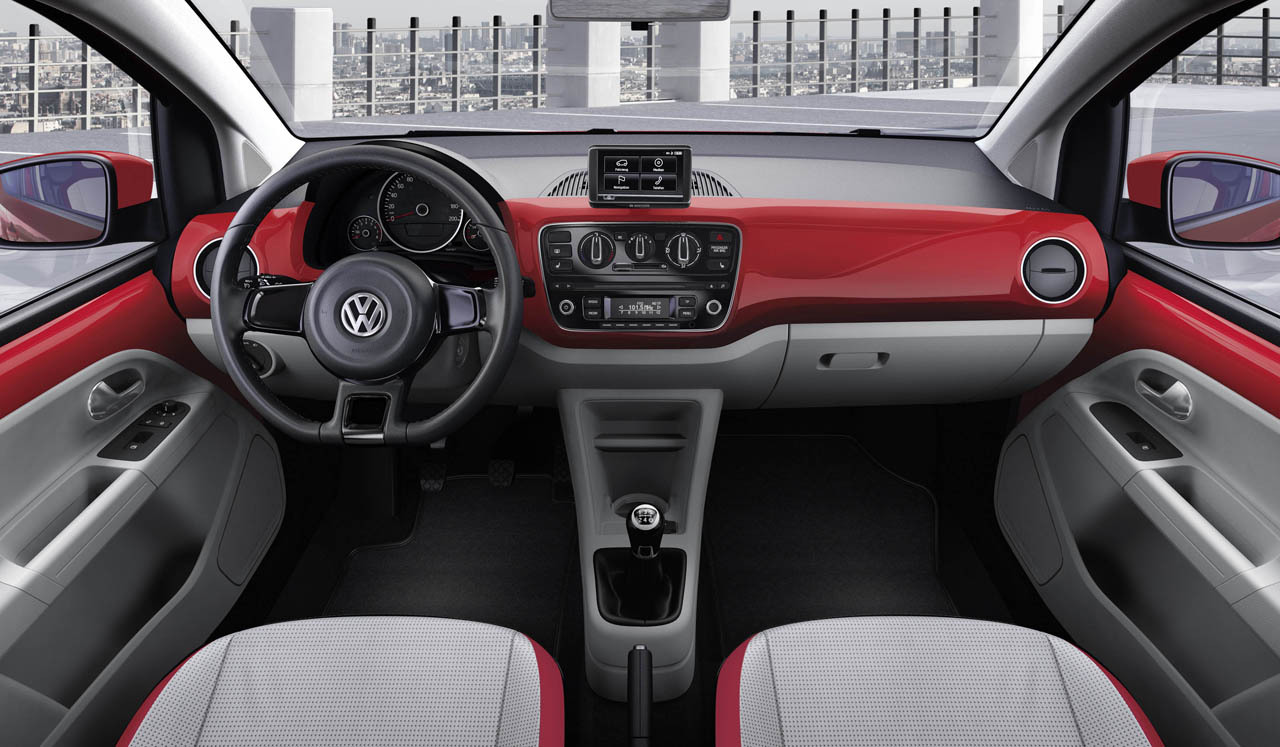
About the Volkswagen Up! we heard first four years ago when at the Frankfurt 2007 autoshow was presented in world premiere the concept Up!.Now at Frankfurt 2011 is the turn to be the production model officially introduced.

The production car as many expected is very similar to the concept car.Volkswagen Up! has very small dimensions.

The interior seems to be very spacious mainly because Volkswagen spent a lot of time studying the interior ergonomics of the car.VW Up! makes its debut of a new generation of cylinder gas engines of 1 liter producing between 59 and 74 HP.

With the help of the Start&Stop system this car can get 70 Mpg.Starting 2013 the Up! will be also sold with an electric engine.The new Up! will be available on the european market this year in December.

Update: New Porsche 911(991) gen-New pictures and info !

This is now officially the new generation of the legendary Porsche 911.This generation of codename 991 will start at a price of 141.110 U.S. dollars or 97.560 Euros in Europe.Its world premiere will take place at the Frankfurt 2011 autoshow that will take place next month.
     The design remains traditional as is the custom at Porsche.This car has 48 year old history behind.For start only 2 versions are available for the new 911 the Carrera and the Carrera S.The first is equipped with a straight six boxer 3.4 liter engine with direct injection making 350 HP.The version of Carrera equipped with the PDK sequential transmission gets to 60 in 4.6 seconds and if you choose the Sport Chrono package it manages 4.4 secs.The top speed of the 911 Carrera is 178 Mph.
     For those that want more there is the Carrera S which is equipped with a 3.8 liter straight six making 400 HP.If the car is equipped with the PDK transmission the 0 to 60 time improves to 4.3 seconds and with the Sport Chrono pack gets to 60 in 4.1 seconds.Carrera S's top speed is over 186 Mph.This new generation Porsche claims is lighter with about 90 lbs.In most countries the new 911 will be available for order by the end of November.


BMW 328 Kamm Coupe

The BMW 328 Kamm Coupé, named after the German aerodynamics pioneer Wunibald Kamm, disappeared without trace back in 1953. But now - 70 years after BMW's famous Mille Miglia victory - BMW Classic has recreated this legendary racing car, once again illuminating an important milestone in both motor sport history and the development of vehicle aerodynamics. "We are very proud to be able to bring this car back into the public spotlight," said Karl Baumer, Director of BMW Group Classic. "We've come up against some major technical challenges, had many discussions and racked up countless hours of research, but when you see the car for the first time you can sense the passion and expertise invested in the project by everyone involved - all those years ago and today."
BMW was quick to appreciate the unique status of its Mille Miglia cars following the victory in 1940, and they were soon moved out of Munich into a rural hideaway to save them from potential destruction during the Second World War. The evacuation was successful, with all five surviving the hostilities essentially unscathed. However, in the upheaval of the immediate post-war period BMW lost track of the cars. With Allied soldiers scouring Germany for rare racing cars, it was hardly surprising that the three Mille Miglia Roadsters resurfaced in Russia, England and America. The winning Touring Coupé from 1940 was initially seized by the Americans before being whisked away by a senior BMW employee. However, it also found its way across the Atlantic when the employee decided to emigrate.
Only the BMW 328 Kamm Coupé remained in Germany, former BMW Director of Racing Ernst Loof having acquired the car for his personal use. By this time he had become a manufacturer in his own right, supplying speedy Veritas racing sports cars to customers in a resurgent post-war Germany.
However, he also laboured consistently under financial woes and a few years later he was forced to part company with the BMW 328 Kamm Coupé. Sadly, this automotive gem was not blessed with a long life under its new owner, succumbing to the scrap heap after an accident in the early 1950s.
There was certainly no denying the historical value of this very special car and, after BMW founded BMW Mobile Tradition in the mid-1990s to oversee an extended reappraisal of the company's history, plans were put together to build a reproduction. But the resurrection project proved to be a tricky undertaking. All design drawings for the car seemed to have disappeared into thin air and there was hardly a rich supply of historical photos around either. It was only with the hands-on assistance of a private collector in Munich that the project team were able to gather together a much larger selection of photos showing the car from a wide variety of angles. Indeed, these even included a good number of shots detailing the car's tubular frame construction.
Now it was time to tackle the exacting task of piecing together a likeness of the complete car from the available information. Computer specialists in the design department embraced the challenge. They started by scanning in the most detailed photos to use as a basis for a 3D geometry program. Then the few reliable constants, such as the wheel rim diameters, wheel offset, headlight size, door handles, wing nuts, indicators and BMW logos, were added until they appeared in the same position in every projection. Every image provided a fresh series of reference points for wheel arches, windows and other parts linked to the fixed constants. Gradually, the well of information deepened until the experts were able to produce a virtual solid model, in which every detail looked right in every view of the car. This was used to generate a program for a five-axis milling machine, which would cut an original-size model from a massive block of highly compacted foam.
A restorer was then commissioned to stretch an original BMW chassis by 20 cm and build a steel space frame according to the templates provided by the photos. However, not long afterwards the project was put on ice. As part of the concept design process for the new BMW Museum an idea was floated of rebuilding the intricate Elektron space frame of the BMW 328 Kamm Coupé as a showpiece for the "Lightweight design" area of the museum. An exact copy of the original space frame was duly produced with the help of a specialist based near Munich. Aluminium was chosen as the material in place of the original Elektron, and the frame's weight duly came very close to that of the original. Although this display frame was never intended to be used in an actual car, the BMW 328 Kamm Coupé idea remained on the table. In the end, it was a project initiated by the Meisterschule für Karosserie- und Fahrzeugbau Leipzig-Leisnig-Erlbach (master craftsmen''s college for body and vehicle construction serving Leipzig, Leisnig and Erlbach) in partnership with the BMW plant in Leipzig that got the ball rolling.
The original plan was to cover the existing steel space frame with aluminium body panels to replicate the external appearance of the car at least. The Meisterschule produced moulds of the foam model in which the panels of the outer skin could be shaped. The finished body has since been on display at the Leipzig plant.
With the 70th anniversary of the Mille Miglia victory fast approaching, BMW Classic was determined to bring its plan to recreate the BMW 328 Kamm Coupé to fruition. However, highly skilled specialists were required to turn the collection of individual parts into a car that could actually be driven. With his excellent BMW 328 Touring Coupé and Mille Miglia Roadster restorations for the new BMW Museum still fresh in the mind, it was clear that René Große - based in Wusterwitz in the state of Brandenburg - would be the right man for the job.
Große used the foam model as the basis for a glass fibre-reinforced plastic mould. This was then shaped (with the help of additional wooden elements) into a strong casing which was split down the middle into two parts. The 25 mm-diameter tubes for the space frame - made from an aluminium alloy that allowed work-hardening - were then fitted into these two half-shells. Extreme precision was the order of the day here, as no corrections could subsequently be made to the outer skin. All this endeavour was aimed at ensuring that the frame would get close to the 30 kg weight of the original. For the outer skin, the team used pure aluminium body panels from a second set supplied by the Meisterschule. The newly made panels for the inside - for the inner front wings, bulkhead, double floor section of the body, dashboard and fuel tank, for example - then had to be integrated into the mould.
The body experts in René Große's team called on all their skill and experience to fit the body to the space frame. An interesting detail of the construction were the 40-mm-wide aluminium strips which were welded to the frame at the outer edges of the metal skin. The outer skin was then edged inwards around these strips to a width of a few millimetres to achieve the visually intricate edges on the bonnet, windows, doors and wheel arches. This detail, like the design of the bonnet hinge and door hinges, had been patented by BMW. And that meant there were sketches available which enabled the team to render the new parts as close as possible to their original templates.
Other challenges included the technical tweaks which set the BMW 328 Kamm Coupé apart from its series-produced siblings, such as the set-back radiator, engine and transmission, modified rear axle and a host of other alterations requiring meticulous detailing.
The BMW 328 Kamm Coupé was finally handed over to BMW Classic in a brief ceremony in March 2010. That left only a short amount of time to prepare the newly created racing car for its big day at the 2010 Mille Miglia - 70 years after its last, memorable appearance in the race.


Content provide by Netcarshow.org


Related Posts Plugin for WordPress, Blogger...