Showing posts with label japanesse. Show all posts

Mazda RX-7-third generation


The Mazda RX-7 is a sports car by the Japanese automaker Mazda. It was produced from 1978 to 2002. The original RX-7 featured a 1146 cc twin-rotor Wankel rotary engine and a sporty front-midship, rear-wheel drive layout. The RX-7 was a direct replacement for the RX-3 (both were sold in Japan as the Savanna) and subsequently replaced all other Mazda rotary cars with the exception of the Cosmo.
The original RX-7 was a sports car. The compact and lightweight Wankel engine (rotary engine) is situated slightly behind the front axle, a configuration marketed by Mazda as "front mid-engine". It was offered as a two-seat coupé, with optional "occasional" rear seats in Japan, Australia, the United States, and other parts of the world. These rear seats were initially marketed as a dealer-installed option for the North American markets.
The RX-7 made Car and Driver magazine's Ten Best list five times. In total, 811,634 RX-7s were produced.

Third generation (FD):

The third generation of the RX-7, FD (with FD3S for the JDM and JM1FD for the USA VIN), featured an updated body design. The 13B-REW was the first-ever mass-produced sequential twin-turbocharger system to export from Japan, boosting power to 255 PS (188 kW; 252 hp) in 1993 and finally 280 PS (206 kW; 276 hp) by the time production ended in Japan in 2002.
Dom's Mazda from Fast&Furious 1
  • Series 6 (1992–1995) was exported throughout the world and had the highest sales. In Japan, Mazda sold the RX-7 through its Efini brand as the Efini RX-7. Models in Japan included the Type R, the top-of-the-range Type RZ, the Type RB, the A-spec and the Touring X, which only came with a 4-speed automatic reducing power to 255 PS (188 kW; 252 hp), but the others ran on the standard 265 PS (195 kW; 261 hp) engine with a 5-speed manual gearbox. Only the 1993–1995 model years were sold in the U.S. and Canada. Series 6 came with 255 PS (188 kW; 252 hp) and 294 N·m (217 ft·lbf). In the UK only 124 examples of this model were sold through the official Mazda network, Only one spec. was available and this included twin oil-coolers, electric sunroof, cruise control and the rear storage bins in place of the back seats.
  • In North America, three models were offered; the "base", the touring, and the R models. The touring FD had a sunroof, leather seats, and a complex Bose Acoustic Wave system. The R (R1 in 1993 and R2 in 1994–95) models featured stiffer suspensions, an aerodynamics package, suede seats, and Z-rated tires.
  • There is also a "Touring Model" which includes a sun roof, and Bose stereo system. Compared to the R1 and R2 which both don't have a moon roof, and they have an extra front oil cooler in the front bumper, and other race modification equipment.
  • Series 7 (1996–1998) included minor changes to the car. Updates included a simplified vacuum routing manifold and a 16-bit ECU allowing for increased boost which netted an extra 10 PS (7 kW). In Japan, the Series 7 RX-7 was marketed under the Mazda brand name. The Series 7 was also sold in Australia, New Zealand and the UK. Series 7 RX-7s were produced only in right-hand-drive configuration.
  • Series 8 (January 1999– August 2002) was the final series, and was only available in the Japanese market. More efficient turbochargers were installed, while improved intercooling and radiator cooling was made possible by a revised frontal area. The seats, steering wheel, and front and rear lights were all changed. The rear spoiler was modified and gained adjustability. The top-of-the-line "Type RS" came equipped with a Bilstein suspension and 17" wheels as standard equipment, and reduced weight to 1,280 kg (2,822 lb). Power was 280 PS (206 kW; 276 hp) with 313.8 N·m (231 ft·lbf) of torque as per the maximum Japanese limit. The very limited edition Type RZ version included all the features of the Type RS, but at a lighter weight (at 1270 kg). It also featured custom gun-metal colored BBS wheels and a custom red racing themed interior. Further upgrades included a new 16-bit ECU and ABS system upgrades. The improved ABS system worked by braking differently on each wheel, allowing the car better turning during braking. The effective result made for safer driving for the average buyer. Easily the most collectible of all the RX-7s was the last 1,500 run-out specials. Dubbed the "Spirit R", they combined all the "extra" features Mazda had used on previous limited-run specials plus new exclusive features. They still command amazing prices on the Japanese used car scene years later. Sticker prices when new were 3,998,000 yen for Type-A and B and 3,398,000 yen for Type-C. Mazda's press release said "The Type-A Spirit R model is the ultimate RX-7, boasting the most outstanding driving performance in its history."
- There are three kinds of "Spirit R": the "Type A", "Type B", and "Type C". The "Type A" has a 5-speed manual transmission, and is said to have the best performance of the three models. The "Type B" has a 2+2 seat configuration and also sports a 5-speed manual transmission. The "Type C" is also a 2+2, but has a 4-speed automatic transmission. Clarification of the build number breakdown for each type is sought as Mazda hasn't publicly published the production figures.Racing versions of the first-generation RX-7 were entered at the prestigious 24 hours of Le Mans endurance race. The first outing for the car, equipped with a 13B engine, failed by less than one second to qualify in 1979. The next year, a 12A-engine car not only qualified, it placed 21st overall. That same car did not finish in 1981, along with two more 13B cars. Those two cars were back for 1982, with one 14th place finish and another DNF. The RX-7 Le Mans effort was replaced by the 717C prototype for 1983. In 1991, Mazda became the first Japanese manufacturer to win the 24 hours of Le Mans. The car was a 4-rotor prototype, the 787B. The FIA outlawed rotary engines shortly after this win. To this day the rotary powered Mazda is the only Japanese manufacturer to have ever won the prestigious 24 hour Le Mans race outright.


Toyota Yaris - Touch & Feel Session

This is an exclusive tour of: Toyota Valenciennes factory.Toyota just launched the new Yaris and these videos show some interesting facts about the new car and the whole process of making it


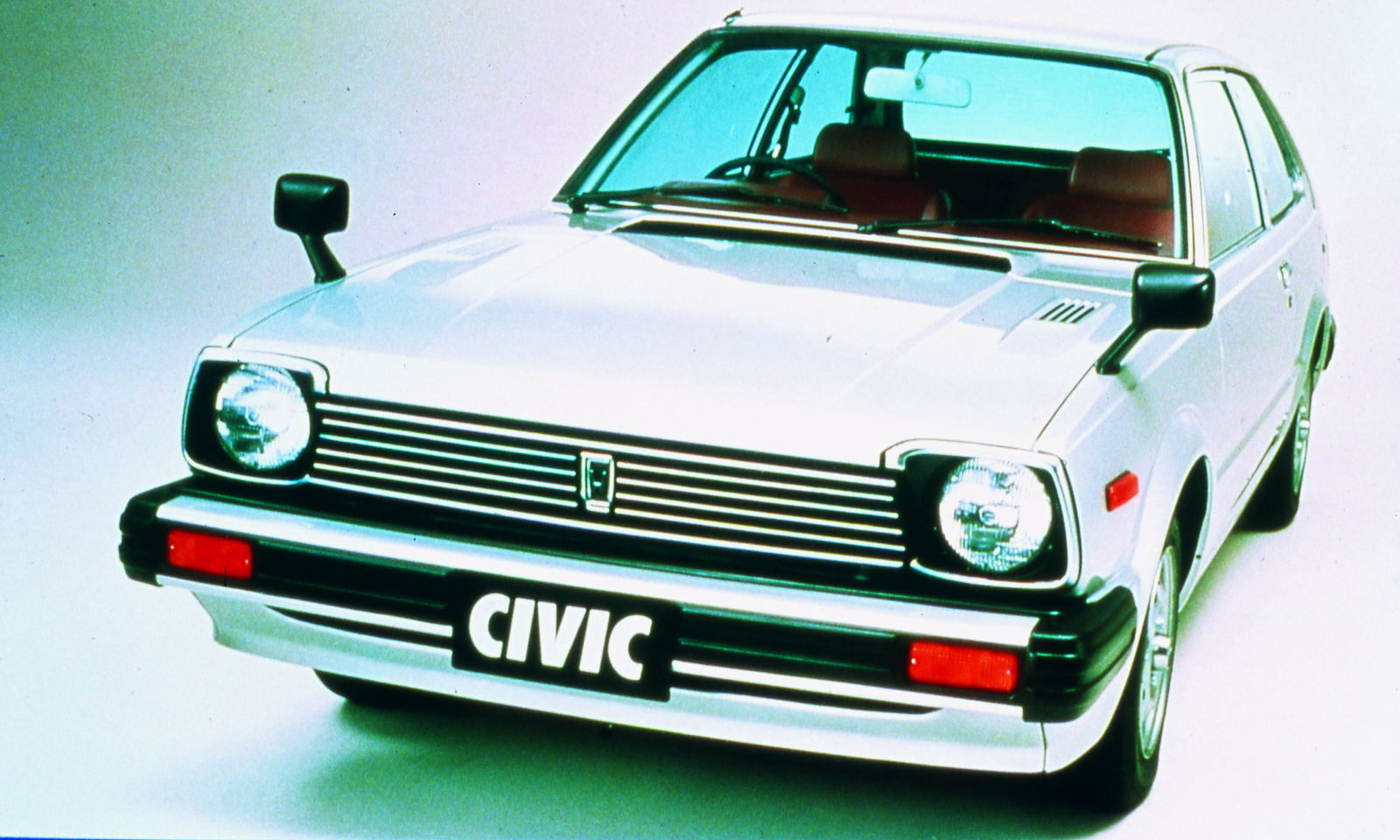
Honda Civic celebrates 39 years !

The first Civic was launched in 1973.We wait for the new generation due to come in 2012.Since 1973 until now over 19.000.000 Honda Civic were sold.This video shows us in retrospective the history of Honda Civic and presents the future intentions of the company for the Civic.Maybe Honda won't forget to give us a new type R.


Nissan 300ZX


300ZX is the name given, in much of the world, to the "Z31" and "Z32" generations of Nissan's Z sports car. Like all other versions of the Z-Car, it was sold in Japan as the Fairlady Z, regardless of model year.[1]

Sold on the Japanese market from 1983 through 2000 and in the United States from 1984 through 1996, the 300ZX name followed the numerical convention initiated with the 240Z, put forth by Yutaka Katayama, the one time president of Nissan Motors USA. The "X" designation had debuted with the previous generation Z car, the 280ZX, to signify the presence of luxury and comfort oriented features. Despite being the significantly less advanced of the two generations, the Z31 model of 1983 through 1989 was the more popular model, with over 100,000 more units sold than the Z32.

Both generations feature a 3.0 litre, V6 engine in either naturally aspirated or turbocharged form. Although both generations used engines from Nissan's VG family and have the same displacement, they are drastically different engines. Z31 cars are powered by the VG30E, a single overhead cam engine with a fairly simple design. Z32 generation models were powered by the VG30DE engine, an advancement on the previous design that featured double overhead camshafts, variable valve timing and individual throttle bodies for each bank of 3 cylinders. Additionally, Z31 Turbo models used a single, non-intercooled turbocharger, while Z32 generation cars featured twin, intercooled turbochargers.

in naturally aspirated form output from the Z32 was 222 hp (166 kW) and 198 lb·ft (268 N·m) of torque, compared to 160-165 hp and 174 lb·ft (236 N·m) of torque from the Z31. Twin turbocharged Z32s produce 300 hp (220 kW) and 283 lb·ft (384 N·m) torque, while the single turbo Z31 produced 200-205 hp and 227 lb·ft (308 N·m) of torque. The Z31's single overhead cam engine has 13 head bolts per head, for a total of 26, where as the Z32's dual overhead cam engine only has 8 head bolts per head, for a total of 16.

Two Special Edition versions of the Z31 generation model were produced; a 50th Anniversary Edition celebrated the company's semi-centennial in 1984 and boasted additional luxury features, and a "Shiro Special", released 4 years later, boasted performance-oriented upgrades.[2][3][4] The Z32 was virtually entirely new at the time of its release, with nearly nothing being carried over from the Z31. One of the most significant and obvious changes was the redesigned body, which had a wider footprint, a rounder profile with fewer hard edges and a reduced drag coefficient of .31 compared to the Z31's .30. Twin Turbocharged Z32s also featured a then-new active rear wheel steering systems called "Super HICAS", which was actuated hydraulically until 1994 when Nissan switched to an electric actuator. Nissan designated the final 300 units earmarked for North American sale in 1996 as "Commemorative Edition" cars, although nothing new or exclusive to the model was actually present; In fact, 1996 model years vehicles did not feature Nissan's NVTC variable valve timing system, which had been present on all Z32 generation models prior to that point. Production continued in Japan until August 2000, with styling updates and the addition of HID headlamps in 1998.[5]

In racing trim, the 300ZX achieved several notable victories, including wins in the 1986 Trans Am series and 1994 24 Hours of Daytona. However, auto sports politics and a GTS-1 class win at the 24 Hours of Le Mans that same year[6] prompted the International Motor Sports Association to declare the twin turbo engine illegal for future competition.[7] The 300ZX also holds the E/BMS land speed record of 419.84 km/h (260.87 mph) from the 1991 Bonneville Speed Trial.[8]

The Z32 300ZX was the first car to be sold following the introduction of a 280-hp power ceiling imposed by JAMA that remained until 2004.[9]

The Z32 300ZX was praised by critics and journalists during its lifetime for its performance, styling, comfort and use of technology. Car and Driver placed the car on its Ten Best list for 7 consecutive years, meaning it made the list during every year of its availability in the United States, and Motor Trend awarded it as the 1990 Import Car of the Year.[citation needed]

The Nissan 350Z, officially the Z33 generation Z-Car, succeeded the 300ZX in 2003.

Toyota 2000 GT

The Toyota 2000GT is a limited-production, front-engine, rear-wheel drive, two-seat, hardtop coupé grand tourer designed by Toyota in collaboration with Yamaha. First displayed to the public at the Tokyo Motor Show in 1965, the 2000GT was manufactured under contract by Yamaha between 1967 and 1970.

The 2000GT revolutionized the automotive world's view of Japan. The 2000GT demonstrated that Japanese auto manufacturers could produce a sports car to rival those of Europe, in contrast to Japan's image at the time as a producer of imitative and stodgily practical vehicles. Reviewing a pre-production 2000GT in 1967, Road & Track magazine summed up the car as "one of the most exciting and enjoyable cars we've driven", and compared it favorably to the Porsche 911. Today, the 2000GT is seen as the first seriously collectible Japanese car and the first "Japanese supercar". Examples of the 2000GT have sold at auction for as much as US$375,000.Much of the work was done by Yamaha, which in addition to its wide product range of the time also did much work for other Japanese manufacturers. Many credit the German-American designer Albrecht Goertz, a protégé of Raymond Loewy, as inspiration for the car. He had gone to Yamaha in Japan in the early 1960s to develop a two-seater sports car for Nissan. A prototype was built, but Nissan decided eventually not to pursue the project. Yamaha also worked for Toyota, then perceived as the most conservative of the Japanese auto makers. Wishing to improve their image, Toyota accepted the proposal, but employed a design of their own penned by Toyota designer Satoru Nozaki.The 2000GT design is widely considered a classic in its own right. Its smoothly flowing bodywork was executed in aluminium and featured pop-up headlights, as well as large plexiglas covered driving lamps on either side of the grille similar to those on the Toyota Sports 800. The design scarcely featured bumpers at all, and the plexiglas driving lamp covers in particular are rather easily damaged. The car was extremely low, just 45.7 in (116 cm) to the highest point of the roof. In 1969, the front was modified slightly, making the driving lamps smaller and changing the shape of the turn signals. The rear turn signals were enlarged at the same time, and some alterations were made to modernise the interior. The last few vehicles were fitted with air conditioning and had automatic transmission as an option. These cars had an additional scoop fitted underneath the grille to supply air to the A/C unit. Two custom open-top models were built for the James Bond film You Only Live Twice, but a factory-produced convertible was never offered during the car's production run.

The interior offered comfortable, if cramped, accommodation and luxury touches like a rosewood-veneer dashboard and an auto-seeking radio tuner. At the time, Road & Track felt that the interior was up to par for a "luxurious GT", calling it an impressive car "in which to sit or ride - or simply admire."The engine was a 2.0 L (121 in³) straight-6 (the 3M) based on the engine in the top-of-the-line Toyota Crown sedan. It was transformed by Yamaha with new double overhead camshaft heads into a 112 kW (150 hp) sports car engine. Carburation was through three two-barrel Solex 40 PHH units. Nine special MF-12 models were also built with the larger but SOHC 2.3 L 2M engine. The car was available with three different final drives. fitted with a 4.375 ratio axle the car was said to be capable of reaching 135 mph (217 km/h).

The engine was traditionally mounted fore-and-aft and drove the rear wheels through a five-speed manual transmission. A limited slip differential was fitted, and in a first for a Japanese car, all-round power-assisted disc brakes. The atypical emergency brake gripped the rear disc directly.Toyota entered the 2000GT in competition at home, coming third in the 1966 Japanese Grand Prix and winning the Fuji 24-Hour Race in 1967. In addition, the car set several FIA world records for speed and endurance in a 72-hour test. Unfortunately, the record car was destroyed in a pace car accident and eventually scrapped. These records shortly prompted Porsche to prepare a 911R especially to beat this record.

Carroll Shelby would also enter a pair of 2000GTs to compete in the SCCA production car races competing in the CP category. Initially Shelby built three cars, including one spare. Although performing well, 1968 was the only season the car competed in the US. Toyota took back one of the cars and rebuilt it into a replica of their record car, which still resides in Japan. The two remaining Shelby cars still reside in the United States.
Related Posts Plugin for WordPress, Blogger...