Cars News Reviews New Used updates road tests and information plus Spy Shots and Cars Photos. THIS IS THE BEST PLACE IN THE ENTIRE BLOGOSPHERE FOR ANYONE INTERESTED IN CARS.
The SLS AMG is designed to be a modern 300SL Gullwing revival by Gorden Wagener. The car has a long bonnet, the passenger compartment is close to the rear axle and the rear of the car is short. The SLS AMG will also adapt the feature of wing doors that will swing open upwards on gas struts, not in a mix of upwards and forward like the SLR. The doors must be closed manually as AMG engineers decided against auto-closing systems because the systems would have added 90 pounds (41 kg) to the car.[4] In case of a roll-over, the doors can be fully detached to allow the occupants to leave the vehicle.
Transmission
Standard transmission is AMG SPEEDSHIFT DCT 7-speed dual-clutchsemi-automatic transmission through a lightweight carbon fiber driveshaft in a transaxle arrangement.[2] Selectable driving modes include "C" (Controlled Efficiency), "S" (Sport), "S+" (Sport plus) or "M" (Manual).[14] A true manual transmission is not available.
Brakes
Standard brakes are 390 mm (15.35 in) (front) and 360 mm (14.17 in) (rear) cast iron disc brakes with 6-piston aluminium (front) and 4-piston (rear) calipers. Optional on the SLS AMG are carbon-ceramic disc brakes. 402 mm (15.83 in) discs with 6-piston aluminium calipers (front) and 360 mm (14.17 in) discs with 4-piston calipers (rear). These brakes provide increased stopping power with a 40% weight reduction compared to the standard brake system.[2]
Environment
The fuel consumption of the SLS AMG is around 13 L/100 km (22 mpg-imp; 18 mpg-US) combined driving according to (NEDC, provisional figure).[2]
Performance
The SLS AMG is capable of accelerating from 0 to 100 km/h (62 mph) in 3.8 seconds, and can reach an electronically limited top speed of 197 mph (317 km/h) (figures are provisional).[15] In a Car and Driver test, the SLS recorded a quarter mile time of 11.7 seconds @ 125 mph (201 km/h).[16]
Safety
In the July 2010 issue of Car and Driver magazine, safety specifications were revealed pertaining to the safety of the SLS AMG's gullwing doors. Ten to fifteen milliseconds after a detected rollover, explosive bolts situated at the top of the door frame fire and bell cranks separate the doors from the car for easy exit during a serious accident. An anti-locking system and a 3-stage ESP® are standard.
Exterior
The exterior aluminum body is supplied by Magna Steyr.[17] This and the CL65 AMG 40th Anniversary Edition are the only roadgoing Mercedes-Benz with the AMG Alubeam Silver paint available, at an extra cost of €11,900 in Germany. Other colors include both metallic as matte colors, such as Designo Magno Kashmir, the matte paint known from the SL63 AMG IWC edition. The SLS AMG has a rearwing which will pop up at high speeds for stability and handling, and when braking.
Versions
The SLS AMG will be made in at least four different versions. The first to launch is the coupe with gullwing doors. In 2009 a Desert Gold version debuted at the Dubai International Auto Show, in mid-2010 a FIA-GT3 racing version. For 2011-2013 Mercedes will also be releasing a roadster (with conventional doors and a soft top), an electric powered E-Cell version (most likely to be a coupe), and there will be a Black Series version, which will see its weight being reduced by as much as 300 kg (661 lb).
SLS AMG GT3
A GT3-spec racing version of the SLS AMG was unveiled at the 2010 New York Auto Show. It is set to compete in national GT3 championships before being allowed race in the FIA GT3 Championship in 2011.[6] At VLN Nürburgring, the SLS AMG GT3 was admitted into the SP9 class with "Balance of Performance" set to 1350 kg and 556 PS,[7] and won its first race in October.[8]
SLS AMG "Blackbird"
The SLS AMG "Blackbird" was a unique, special edition SLS AMG created by Mercedes-Benz's Australian subsidiary specifically for the 2010 Australian International Motor Show. The one-off vehicle was eventually sold to a private customer from Singapore.[9]
SLS AMG E-Cell
The SLS AMG E-Cell is planned for model year 2013 and will use all-electric powertrain components. It will include four electric motors (one on each wheel) with combined ratings of 392 kW (525 bhp) and 880 N·m (650 lb·ft), liquid-cooled 400V lithium-ion battery rated 48 kWh and a capacity of 40 Ah. The battery will be supplied by Deutsche Accumotive GmbH & Co. KG, a joint venture between Daimler AG and Evonik Industries AG.[10][11] Mercedes-Benz anticipates selling the vehicle beginning in late 2012.[12]
SLS AMG Roadster
The SLS AMG Roadster was unveiled by Mercedes-Benz via press release on May 5, 2011. It retains the same specifications, dimensions and drivetrain as the Coupe but is a more traditional convertible with a power folding fabric top and conventional doors.[13]
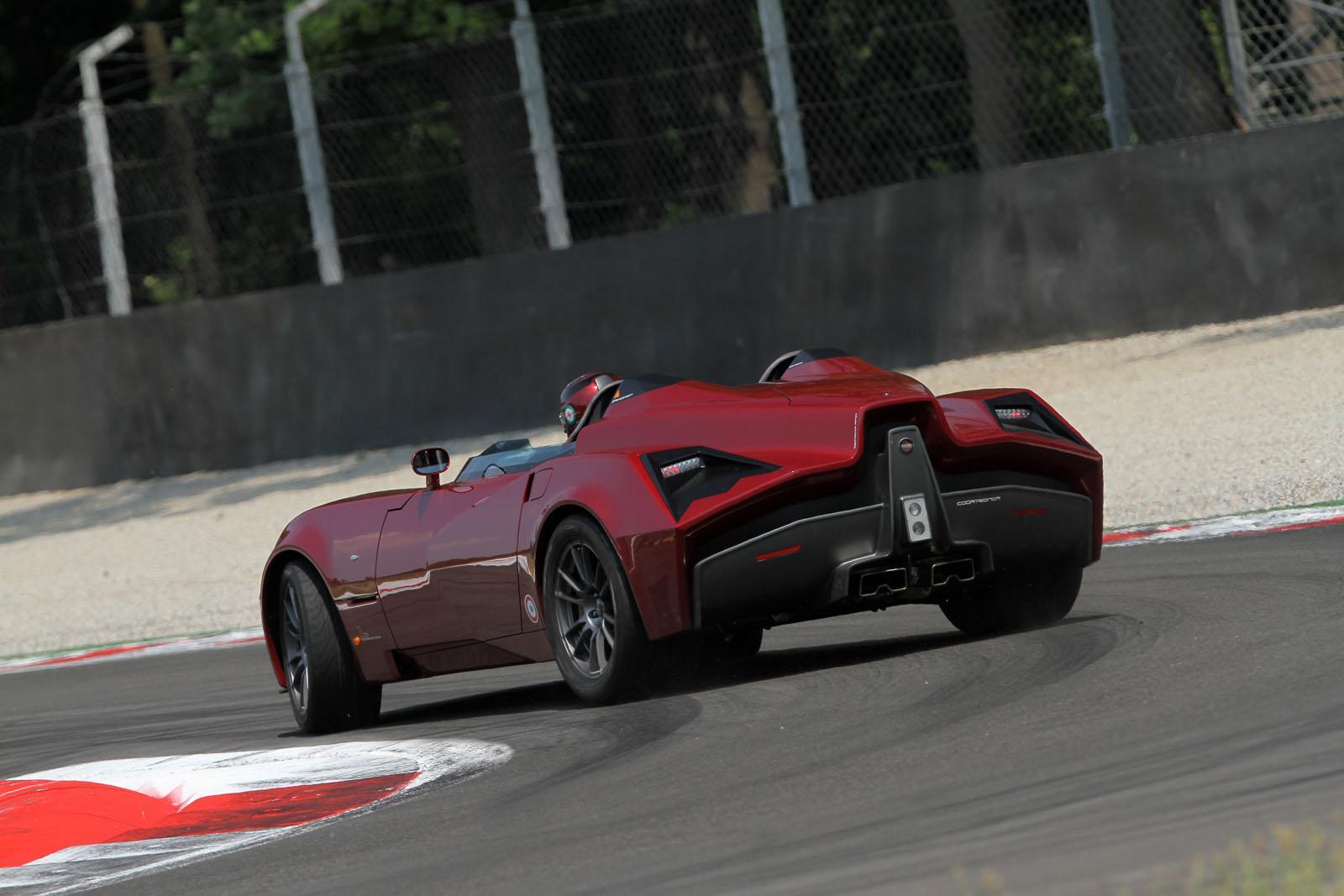
Spada Vetture Sport revealed us new details about the Codatronca Monza, an exclusive car that made its debut at Top Marques Monaco.The brand new Spada Codatronca Monza is based on the coupe Codatronca TS,which we know that it has a very attractive design inspired by the design of the roadster cars of the 60's.The model is equipped with very modern technology despite the retro design.Some examples would be the tubular design,the ultra light body frame,Brembo brakes and the OZ Racing wheels that have on Pirelli PZero Corsa racing tires.The power of this new Italian supercar comes from a huge 7.0L V8 that makes 710 HP and 950 Nm. of torque.The power is transmitted to the wheels by a 6 gear manual transmission.Thanks to all these mechanical orgy this vehicle can reach 60 in just 3 seconds( in the first gear)and has a top speed of 210 Mph.
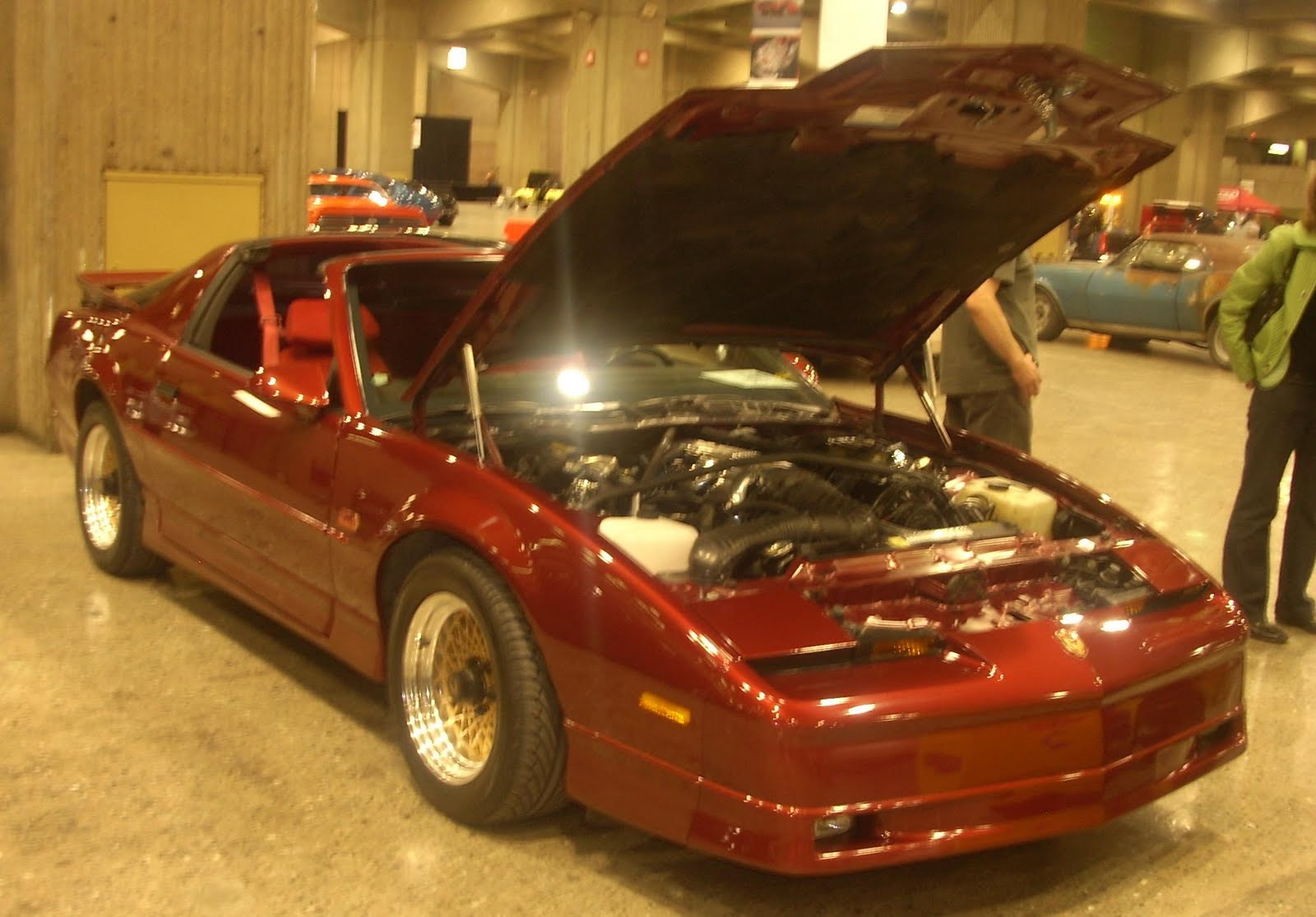
The Pontiac Firebird was built by the Pontiac division of General Motors between 1967 and 2002. The Firebird was introduced the same year as the automaker's platform-sharing model, the Chevrolet Camaro. This coincided with the release of the 1968 Mercury Cougar, which shared its platform with another pony car, the Ford Mustang. The vehicles were powered by various four-cylinder, six-cylinder, and V8 engines of different GM divisions. While primarily Pontiac-powered until 1977, Firebirds were built with several different engines from nearly every GM division until 1982 when GM began to discontinue engines it felt were unneeded and either spread successful designs from individual divisions among all divisions or use new engines of corporate architecture. FIRST GENERATION:
The first generation Firebirds had a characteristic Coke bottle styling. Unlike its cousin, the Chevrolet Camaro, its bumpers were integrated into the design of the front end and its rear "slit" taillights were inspired by the Pontiac GTO. Both a two-door hardtop and a convertible were offered through the 1969 model year. Originally the car was a "consolation prize" for Pontiac, who had initially wished to produce a two-seat sports car of its own design, based on the original Banshee concept car. However, GM feared such a vehicle would directly compete with Chevrolet's Corvette, and the decision was made to give Pontiac a piece of the pony car market by having them share the F-body platform with Chevrolet. The base model Firebird came equipped with the OHC inline-6 and a single-barrel carburetor. The next model, the Sprint, had a four-barrel carburetor, developing 215 hp (160 kW). Most buyers opted for one of the V8 engines: the 326 CID (5.3 L) with a two-barrel carburetor producing 250 hp (186 kW); the "H.O." (High Output) engine of the same displacement, but with a four-barrel carburetor and producing 285 hp (213 kW); or the 400 CID (6.6 L) from the GTO with 325 hp (242 kW). A "Ram Air" option was also available in 1968, providing functional hood scoops, higher flow heads with stronger valve springs, and a different camshaft. Power for the Ram Air package was the same as the conventional 400 H.O., but the engine peaked at a higher RPM.
400 cu in (6.6 L) Pontiac Ram Air II V8 (mid-year release)
1969
250 cu in (4.1 L) Pontiac OHC I6
350 cu in (5.7 L) Pontiac V8
350 cu in (5.7 L) Pontiac H.O. V8
400 cu in (6.6 L) Pontiac V8
400 cu in (6.6 L) Pontiac H.O. Ram Air III V8
400 cu in (6.6 L) Pontiac Ram Air IV V8
SECOND GENERATION: The second generation debut for the 1970 model year was delayed until February 26, 1970, because of tooling and engineering problems; thus, its popular designation as a 1970½ model, while leftover 1969s were listed in early Pontiac literature without a model-year identification.[5] Trims
Firebird
Firebird Esprit
Firebird Formula
Firebird Trans-Am
Firebird Trans-Am WS6
Firebird Skybird
Firebird Redbird
Firebird Yellowbird
Special versions
Special Edition (popular 'Bandit')
Gold Special Edition
Macho Trans-Am (made by one of the Pontiac dealers)
Replacing the "Coke bottle" styling was a more "swoopy" body style, with the top of the rear window line going almost straight down to the lip of the trunk lid—a look that was to epitomize F-body styling for the longest period during the Firebird's lifetime. The new design was initially characterized with a large C-pillar, until 1975 when the rear window was enlarged. There were two Ram Air 400 cu in (6.6 L) engines for 1970: the 335 hp (250 kW) Ram Air III (366 hp (273 kW) in GTO) and the 345 hp (257 kW) Ram Air IV (370 hp (280 kW) in GTO) that were carried over from 1969. The difference between the GTO and Firebird engines was the secondary carburetor linkage which prevented the rear barrels from opening. Bending the linkage to allow full carburator operation resulted in identical engines. A distinctive, slant-nose facelift occurred in 1977, redone somewhat in 1979. From 1977 to 1981, the Firebird used four square headlamps, while the Camaro continued to retain the two round headlights that had previously been shared by both Second Generation designs. Curb weights rose dramatically in the 1973 model year due to the implementation of 5 mph (8.0 km/h) telescoping bumpers and various other crash and safety related structural enhancements; SD455 Trans Ams weighed in at 3,850 lb (1,750 kg). The 455 engine available in the second generation Firebird Trans Am was arguably the last high-performance engine of the original muscle car generation. The 455 cu in (7.5 L) engine first made its appearance in 1971 as the 455-HO. In 1973 and 1974, a special version of the 455, called the SD-455, was offered. The SD-455 consisted of a strengthened cylinder block that included 4-bolt main bearings and added material in various locations for improved strength. Original plans called for a forged crankshaft, although actual production SD455s received nodular iron crankshafts with minor enhancements. Forged rods and forged aluminum pistons were specified, as were unique high flow cylinder heads. A 1967 GTO Ram Air camshaft with 301/313 degrees of advertised duration, 0.407 inch net valve lift, and 76 degrees of valve overlap was specified for actual production engines in lieu of the significantly more aggressive Ram Air IV style cam that had originally been planned for the engine (initially rated at 310 hp (230 kW) with that cam), but proved incapable of meeting the tightening emissions standards of the era. This cam, combined with a low compression ratio of 8.4 (advertised) and 7.9:1 actual resulted in 290 SAE net horsepower. Production test cars yielded 1/4 mile times in the 14.5 second/98 MPH range in showroom tune – results consistent for a car with a curb weight of 3,850 pounds and the rated 290 SAE net horsepower figure some sources suggest was "under-rated," High Performance Pontiac magazine dyno-tested an SD and gave it 371 SAE net rating. During a 1972 strike, the Firebird (and the sister F-bodyCamaro) were nearly dropped.[7] Pontiac offered the 455 for a few more years, but tightening restrictions on vehicle emissions guaranteed its demise. Thus, the 1976 Trans Am was the last of the "Big Cube Birds," with only 7,100 units produced with the 455 engine.
Beginning in 1978, Pontiac engineers reversed years of declining power by raising the compression ratio in the Pontiac 400 through the installation of different cylinder heads with smaller combustion chambers (1977 pontiac 400 engines also had the 350 heads bolted to the 400 blocks, these heads were known as the 6x-4 heads)(taken from the Pontiac 350). This increased power by 10% for a total of 220 during the 1978–79 model years. The 400/403 options remained available until 1979, when the 400 CID engines were only available in the 4-speed transmission Trans Ams and Formulas (the engines had actually been stockpiled from 1978, when PMD had cut production of the engine). 1979 marked the 10th Anniversary of the Trans Am, and a special anniversary package was made available: silver paint with a silver leather interior. The 10th Anniversary cars also featured a special Firebird hood decal, which extended off of the hood and onto the front fenders. In 1979 Pontiac sold 116,535 Trans Ams which still holds the record to this day. In 1980, due to ever-increasing emissions restrictions, Pontiac dropped all of its large displacement engines.
1980 therefore saw the biggest engine changes for the Trans Am. The 301, offered in 1979 as a credit option, was now the standard engine. Options included a turbocharged 301 or the Chevrolet 305 small block. In the final year of the Second Generation Firebirds (1981), Trans Am still used the same engines as it had in the previous model year, with the only change being the addition of a new electronic carburetion system. THIRD GENERATION: The availability and cost of gasoline (two fuel crises had occurred by this time) meant the weight and the fuel consumption of the 3rd generation had to be considered in the design. In F-body development, both the third generation Firebird and Camaro were proposed as possible front wheel drive platforms, but the idea was scrapped. The state of the art of computerized engine management was in its infancy, and as long as saving fuel was the primary objective, it was not possible to have high horsepower and torque numbers. They did manage to cut enough weight from the design so that acceleration performance would be better than the 1981 models. They also succeeded in the fuel consumption department, offering a 4-cylinder Firebird that would provide 34 miles per gallon.[8] GM executives decided that engineering effort would best be spent on aerodynamics and chassis development. They created a modern platform, so that when engine technology advanced, they would have a well balanced package with acceleration, braking, handling, and aerodynamics. For the time being, they would have world class aerodynamics and handling, and excellent fuel economy. (Little did they know that by 1989 the fastest American car on the market would be a Firebird.[9])
The Firebird and Camaro were completely redesigned for the 1982 model year, with the windshield slope set at 62 degrees, (about 3 degrees steeper than anything GM had ever tried before), and for the first time, a large, glass-dominated hatchback that required no metal structure to support it. Two concealed pop-up headlights, a first on the F-Body cars, were the primary characteristic that distinguished the 3rd Gen Firebird from its both its Camaro sibling and its prior form; (a styling characteristic carried into the 4th Gen's design). In addition to being about 500 lbs (227 kg) lighter than the previous 2nd Gen design, the 3rd Generation Firebird was the most aerodynamic product GM had ever released. Wind tunnels were used to form the new F-Body platform's shape, and Pontiac took full advantage of it. The aerodynamic developments extended to the finned aluminum wheels with smooth hubcaps and a functional rear spoiler.
FOURTH GENERATION:The fourth-generation F-body continued the aerodynamic formula initiated by the previous generation, but saw declining sales. As before, the Camaro kept the exposed headlights and the Firebird its pop-up units, with some minor changes. The overall styling of the Firebird more strongly reflected the "Banshee IV" concept car than the 1991 "face lift" received by the Third Generation model.
1993
From 1993 until 1995 (1995 non-California cars), Firebirds received a 3.4 L V6 with 160 hp (120 kW), or the 5.7 L 275 hp (205 kW) LT1 V8. The 1993 Firehawk (only available in Formula trim for 1993–1997) received the SLP package with a functional hood scoop and other performance enhancements that increased power to 300 hp (220 kW). Only 201 were built for 1993, with the same engine as in the 1993 Corvettes. The LT1 in the Formula and Trans Am was very similar to the one in the Corvette C4, except with 2-bolt mains and a more restrictive intake/exhaust system. The 1993 model year V6 models had angular cable driven throttle body units that later changed in 1994 to multi-port fuel injection.
The 1994 model year marked the 25th anniversary of the Trans Am, and another Anniversary Edition was released, painted white with a single blue stripe down the center of the vehicle that was reminiscent of the 1970 Trans Am. It was also the debut of the 4L60e 4 speed electronically controlled automatic transmission in the F-body, which took the place of the non-electronic 700R4.
The 1995 models were the same as those of previous years, but traction control (ASR: Acceleration Slip Regulation) was now available. The steering wheel was also changed. It was borrowed from the Grand Prix. An optional performance package included polyurethane bushings, suspension upgrades, as well as a freer intake/exhaust similar to that on the Chevrolet Corvette, supplying 315 hp, but this package was seldom ordered. The 'Transmission Perform' button was available only in the 1994 and 1995 Formula and Trans Am. This option was stopped for the 1996 and later models, but the connections are still there for 1996 and 1997 Formula and Trans Am. The mid-1995 and later models had a 200 hp 3.8 L V6 as the base engine, and the power rating of the LT1 had been raised to 285, due to a new dual catalytic converter exhaust system that was optional in previous years.
The 1997 Firehawk LT4 model, made by SLP Performance Parts and sold through Pontiac dealerships, had 330 hp (243 kW) and 340 ft·lbf (459 Nm) of torque.
In 1998, the Firebird received a "face lift" dominated by a new front fascia (now with four pop-up headlights) as well as other modifications, the most significant of which was the introduction of the latest Corvette small block V8 engine, the LS1. Initially, the color "Bright Purple Metallic" had been available, however it was discontinued due to poor sales. The color was replaced with "Navy Blue Metallic," but not before a total of 12 Trans Am models with the WS6 Ram Air package (10 coupés and two convertibles) made it out of the factory dressed in "Bright Purple Metallic."[1]
For 1998–2002 Pontiac used the same heavy duty brakes, steering ratios, fuel pumps and shocks (non-WS6) on both V6 and V8 models.
The all-aluminum 5.7 L V8 engine was sourced from the Corvette C5, and produced 305 hp (227 kW) at 5,200 rpm; 335 ft·lbf (454 N·m) at 4,000 rpm, (310 after 2000) or 320 hp (325 after 2000) in the WS-6 "Ram Air" version. In 2001 and 2002, models equipped with a V8 received the high-flow LS6 intake manifold and a high-performance clutch. A Firehawk model, produced by SLP and sold through Pontiac dealerships, had 330 hp (335 after 2000, 345 in late 2002 models equipped with the optional Blackwing intake. The V6-equipped Firebirds were rated at 205 hp (153 kW)[citation needed].
5.7 L (347.8 cu in) LS1 V8 (aluminum block and heads)
2000
3.8 L (231.9 cu in) L36 V6
5.7 L (347.8 cu in) LS1 V8 (aluminum block and heads)
2001
3.8 L (231.9 cu in) L36 V6
5.7 L (347.8 cu in) LS1 V8 (aluminum block and heads)
2002
3.8 L (231.9 cu in) L36 V6
5.7 L (347.8 cu in) LS1 V8 (aluminum block and heads)
FIREBIRD TRANS AM:
The Trans Am was a specialty package for the Firebird, typically upgrading handling, suspension, and horsepower, as well as minor appearance modifications such as exclusive hoods, spoilers, fog lights and wheels. In using the name Trans Am, a registered trademark, GM agreed to pay $5 per car sold to the SCCA.[10] Four distinct generations were produced between 1969 and 2002. These cars were built on the F-body platform, which was also shared by the Chevrolet Camaro. The second generation was available from 1970 to 1981 and was featured in the 1977 movie Smokey and the Bandit, the 1978 movie Hooper and the 1980 movie Smokey and the Bandit II. The third generation, available from 1982 to 1992, was featured in the 1983 movie Smokey and the Bandit Part 3 and the 1984 movie Alphabet City. KITT, the automotive star, and its evil counterpart KARR, of the popular 1980s TV series Knight Rider, was a modified third generation Trans Am. The fourth generation Trans Am, available from model years 1993 to 2002, offered between 275 bhp (205 kW) and 325 bhp (242 kW).
Racing
Firebirds were used in the Trans-Am series in the 1960s and 1970s. When the Pontiac Trans Am came out, there was controversy over the model's inability to compete in the Trans-Am because the smallest available engine was too large for use in the series at 400 cubic inches (6.6 liters). The name also caused controversy because it was used without permission from the SCCA, who threatened suit. GM settled the dispute by paying US$5 to the SCCA for every car sold. When the Trans-Am was last seen, model year 2002 Firebirds were in use. Firebirds were used in the IROC Series until it folded after the 2006 season. During the 1995, 1996, and 1997 NHRA seasons, 14-time Funny Car champion John Force used a Firebird body to replace the obsolete Oldsmobile Cutlass and Chevrolet Lumina body he had used since 1988. He used it for three seasons, winning the championship in all three years. The Firebird body also replaced the Oldsmobile Cutlass in the Pro Stock class in 1995, forcing drivers Warren Johnson, Jerry Eckman, and Mark Pawuk to replace their body styles for the 1996 year, none of them would win with the first year of the Firebird body, but Pro Stock driver Jim Yates, a second year driver, using the Firebird body, would.
The team participating in Formula 1 have reached a compromise with the FIA officials regarding the future engines that will be used in F1 guaranteeing that they'll continue the collaboration with their present engines suppliers. Until the present day the plans included the replacement of the present engines, 2,4L V8,with 1,6L turbo in 4 cylinders until 2k13.Most of the current suppliers(especially)Ferrari have opposed vehemently against this proposal. The first step toward the "green" are for the F1 competition announces to be a difficult one but the F1 one commission already agreed with the others for the use of a 1,6L V6 turbo.With the agreement of FIA, the F1 commissions plan may enter into force starting next month this meaning that in 2k14 all cars will use the new V6 engine.To be honest I kinda miss the times when in the F1 competition there weren't no concern about the environment and thus the eco "green" shit that anoys me today.But still in motorsport talent and passion are the things that matter most.I invite you all to share me on Facebook and Twitter and connect with me just searching Michael Scoffield.