


Showing posts with label Chevrolet Camaro. Show all posts

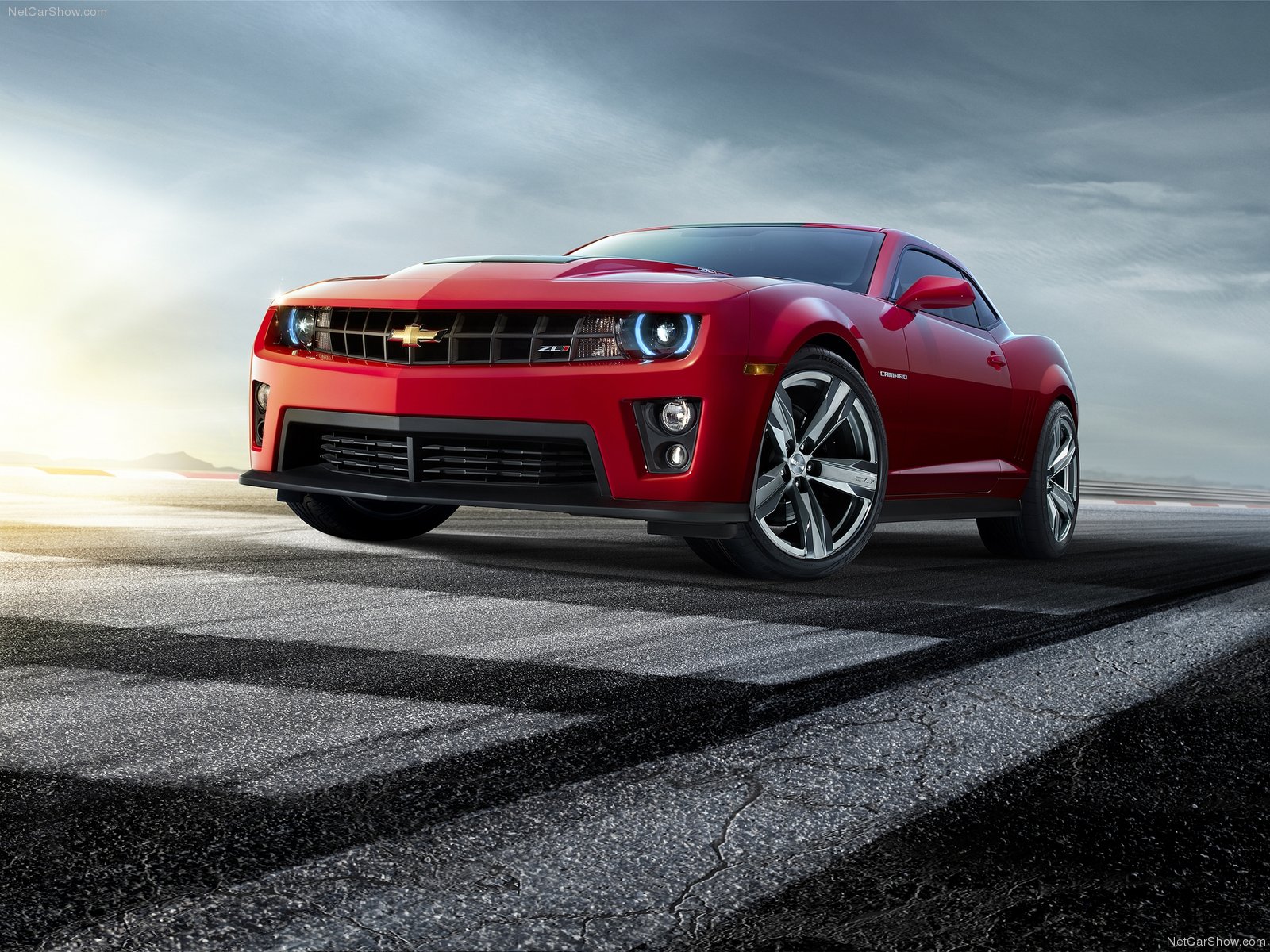
Chevrolet Camaro ZL1

The 2012 Chevrolet Camaro ZL1 debuted at the 2011 Chicago Auto Show. It is the highest-performing Camaro and the most technically advanced car ever developed in its class. The new ZL1 continues the momentum of Camaro, propelling it into an entirely new realm of leading-edge performance technology. It is planned to launch at the beginning of 2012.
Motivated by a supercharged V-8 engine producing an estimated 550 horsepower (410 kW), the Chevrolet Camaro ZL1 will be the fastest Camaro ever offered by Chevrolet. And more than just power, the ZL1 features technologically advanced and highly developed chassis and suspension systems that help it deliver balanced, track-ready handling and braking power to complement its high engine output. Rigorous development of the Chevrolet Camaro ZL1 is ongoing, and official estimates of the car's capabilities will be released later in 2011, as testing nears completion.
"Camaro ZL1 is about high-tech performance and design, and is a type of car no one has ever brought to this segment previously," said Rick Scheidt, vice president of Chevrolet marketing. "It's the most technically advanced Camaro ever, so we've chosen a name from the most elite and exclusive Camaro in history."
The ZL1 name is derived from the all-aluminum racing engine of the same name, which was developed in the late 1960s and installed into a handful of regular-production 1969 Camaros. Only 69 were built with the engine, but they've achieved mythical status among enthusiasts, as they represented the pinnacle in Camaro performance - until now. The 2012 Chevrolet Camaro ZL1 model is designed to be a major leap forward for the Camaro, bringing a new level of performance capability to the segment.
The central goal of the car's development was creating something new - a Camaro intended to reach optimal lap times on top road-racing circuits and excellent driving dynamics on the street. To achieve that goal, engineers evolved many of the existing Camaro's systems, as well as incorporated new technologies such as electric power steering and Magnetic Ride Control, the world's fastest-reacting suspension system.
Camaro ZL1's design communicates and supports its performance mission. Rather than using decorative elements, Chevrolet Camaro ZL1 is visually differentiated from other current Camaro models with elements vital to the car's elevated capabilities.
"Everything about the ZL1's design is directly related to its technology and serious performance, especially aerodynamics," said Ed Welburn, vice president, Global Design. "Our designers' goal was to execute that function-oriented design with beautifully sculpted forms, creating an imposing, powerful persona. Function becomes the aesthetic. The intent is a car that delivers on the attitude it projects."
Major elements of the ZL1's design are a new front fascia and hood with air extractors, designed in tandem to create aerodynamic downforce to aid handling. The car's hood includes a signature center section constructed of carbon fiber and rendered in satin black finish. New rocker panels, wide tires, 20-inch wheels and exhaust tips portray the car's handling and power.
The Chevrolet Camaro ZL1 badge appears on the grille, hood and the brake calipers, all key areas portraying the technology within.
Tech overview
Supporting the dynamic track and street performance of the ZL1 is the LSA 6.2L supercharged engine, which will produce an estimated 550 horsepower (410kW) and 550 lb.-ft. of torque (677 Nm), with specific features for the Camaro. Built on GM's legendary all-aluminum, small-block V-8 architecture, the LSA features an intercooled supercharger system, premium heat-resistant aluminum-alloy cylinder heads and other details designed to ensure its exceptional performance is delivered with smoothness and refinement. Components and design elements that contribute to the LSA's performance include:
  • * Balanced, lightweight reciprocating assembly
  • * High-strength hypereutectic pistons
  • * Sixth-generation Eaton supercharger with four-lobe rotors
  • * Piston oil squirters.
Because the Chevrolet Camaro ZL1 uses electric power steering, the engine does not incorporate a conventional hydraulic power steering pump on its accessory drive system. This enhances performance, because no engine power is used to turn a steering pump pulley.
Chevrolet Camaro ZL1 is a complete high-performance car, not just a Camaro with more power. Key technical highlights include:
Transmission - The high-performance Tremec TR-6060 six-speed manual is matched with the LSA engine. It is the "MG9" version of the transmission, with a higher torque capacity. It is used with a dual-mass flywheel and twin-disc clutch for easy operation and shift smoothness. A new, shorter-throw shifter actuates the gear changes.
Exhaust - Chevrolet Camaro ZL1 is equipped with a dual-mode exhaust system, which alters the sound level and character in response to engine rpm. First used on the legendary Corvette, and specifically tuned for Chevrolet Camaro ZL1, the dual-mode exhaust will give the car a signature sound.
Drivetrain - It is revised with a stronger driveshaft and rear axle system, featuring a larger and stronger cast iron differential housing, stronger axles and heavy-duty limited-slip differential. This patent-pending system is designed to ensure that ZL1's tremendous power is delivered smoothly to the ground.
Suspension - The suspension features completely revised tuning and the inclusion of segment-exclusive Magnetic Ride Control. Chevrolet Camaro ZL1's Magnetic Ride system will include driver selectable modes (Tour and Sport) tailored for the preferred style of driving. It uses advanced magneto-rheological science to produce shock damping with the highest level of precision, enabling body control optimized for excellent performance in everyday driving as well as track situations. This technology appears on only a small roster of some of the world's finest performance cars. Other chassis elements are redesigned to support the car's high-performance limits. Rear stabilizer bars have drop links repositioned outboard of the control arms. This makes the bars more effective in controlling body roll in turns, with crisp response to driver commands.
Brakes and Steering - Camaro ZL1 features an advanced track-capable braking system, developed in conjunction with experts from Brembo. The large 14.6-inch (370 mm) two-piece front rotors have six-piston calipers; the 14.4-inch (365 mm) rear rotors have four-piston calipers. Chevrolet Camaro ZL1 marks the entry of a new electric power steering system to Camaro. It is being developed to ensure precise control and feedback to the driver, with greater variability of effort for high-performance driving.
Exterior - ZL1's signature from the front is the redesigned fascia and aluminum hood with a raised, carbon fiber insert. The fascia includes a front splitter and new vertical fog lamps. The fog lamp area includes air intakes designed for brake cooling. The hood features front-mounted air extractors that direct air precisely over the car. Visually, this center section, in satin black carbon fiber, communicates the car's high-performance intent as a visual contrast to the car's exterior color. Functionally, the air extractor is a key in connecting airflow closely to the bodywork, creating aerodynamic downforce. The carbon fiber center section reduces the mass of the hood. High-intensity discharge (HID) headlamps and fog lamps are standard. The rear of the car includes a diffuser and spoiler, also functional elements that enhance the car's aerodynamics.
Wheels and Tires - New-design, 20-inch forged aluminum wheels, which are lighter than the 20-inch wheels used on the Camaro SS, are used with new Goodyear Supercar F2 ties developed specifically for the Chevrolet Camaro ZL1.
Interior - ZL1 is tailored for high-performance driving. The front seats feature microfiber suede inserts. Other enhancements include a redesigned steering wheel, alloy pedals, Head-Up Display with unique performance readouts and the "four-pack" auxiliary gauge system featuring a boost readout.
Production details
All of the Camaro exterior colors will be offered with the ZL1, but black is the only interior color. The unique exterior features are complemented with a black center section on the hood. Inside, the Chevrolet Camaro ZL1 has heated leather seats with microfiber inserts and ZL1 logos embroidered on the front headrests. Microfiber suede is repeated as an accent on the instrument panel, adding a richer look to the interior. The Chevrolet Camaro ZL1 will include the same content as the current 2SS package and include the following new or unique features:
  • * Six-way power driver and passenger seats
  • * Unique instrument panel and door panel inserts; and ZL1-logo sill plates
  • * Steering wheel audio controls with Bluetooth capability
  • * Wireless PDIM and USB-port
  • * Boston Acoustics premium audio system
  • * Rear parking assist
  • * Rear camera system (displayed in the inside rearview mirror).


Engineers have already driven Chevrolet Camaro ZL1 prototypes extensively at demanding road courses in the U.S. and Germany, with final testing being completed through the balance of 2011.
Source:Netcarshow.com

Chevrolet Camaro-Ford Mustang


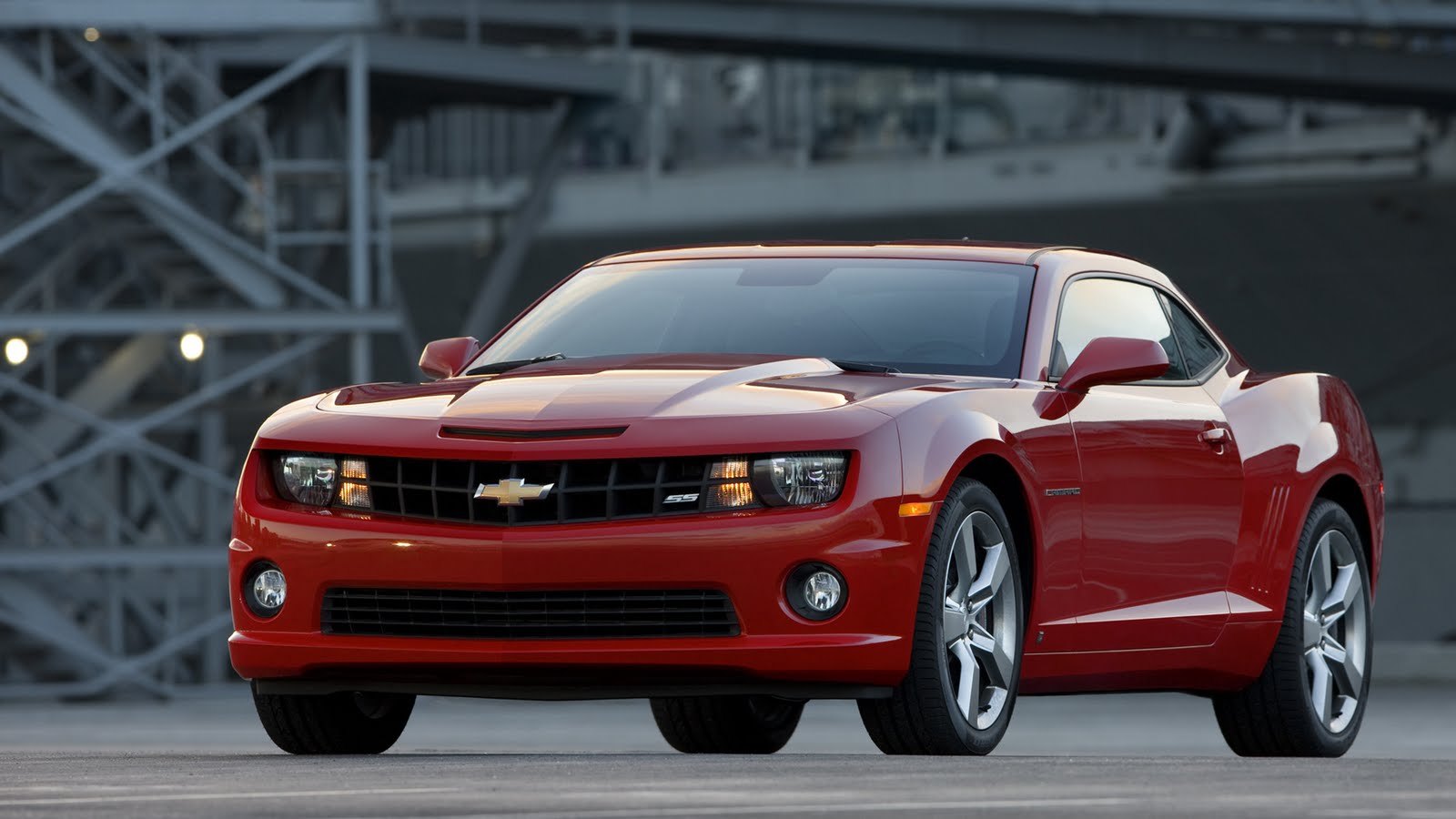
The Chevrolet Camaro is an automobile manufactured by General Motors under the Chevrolet brand, classified as a pony car[1][2] and some versions also as a muscle car.[3][4] It went on sale on September 29, 1966, for the 1967 model year and was designed as a competing model to the Ford Mustang. The car shared its platform and major components with the Pontiac Firebird, also introduced for 1967.

Four distinct generations of the Camaro were developed before production ended in 2002. The nameplate was revived again on a concept car that evolved into the fifth-generation Camaro; production started on March 16, 2009.First-generation Camaro debuted in September 1966, for the 1967 model year, up to 1969 on a new rear-wheel drive GM F-body platform and would be available as a 2-door, 2+2 seating, coupe or convertible with a choice of 250 cu in (4.1 L) inline-6 and 302 cu in (4.9 L), 307 cu in (5.0 L), 327 cu in (5.4 L), 350 cu in (5.7 L), or 396 cu in (6.5 L) V8 powerplants. Concerned with the runaway success of the Ford Mustang, Chevrolet executives realized that their compact sporty car, the Corvair, would not be able to generate the sales volume of the Mustang due to its rear-engine design, as well as declining sales, partly due to the bad publicity from Ralph Nader's book, Unsafe at Any Speed. Therefore, the Camaro was touted as having the same conventional rear-drive, front-engine configuration as Mustang and Chevy II Nova. In addition, the Camaro was designed to fit a variety of power plants in the engine bay. The first-generation Camaro would last until the 1969 model year and would eventually inspire the design of the new retro fifth-generation Camaro.
The Ford Mustang is an automobile manufactured by the Ford Motor Company. It was initially based on the second generation North American Ford Falcon, a compact car.[1] Introduced early on April 17, 1964,[2] as a "1964½" model, the 1965 Mustang was the automaker's most successful launch since the Model A.[3] The model is Ford's third oldest nameplate in production[citation needed] and has undergone several transformations to its current fifth generation.

The Mustang created the "pony car" class of American automobiles—sports car-like coupes with long hoods and short rear decks[4]—and gave rise to competitors such as GM's Chevrolet Camaro,[5] AMC's Javelin,[6] and Chrysler's revamped Plymouth Barracuda.[7] It also inspired coupés such as the Toyota Celica and Ford Capri, which were exported to the United States.As Lee Iacocca's assistant general manager and chief engineer, Donald N. Frey was the head engineer for the T-5 project—supervising the overall development of the car in a record 18 months[18][19]—while Iacocca himself championed the project as Ford Division general manager. The T-5 prototype was a two-seat, mid-mounted engine roadster. This vehicle employed a Taunus (Ford Germany) V4 engine and was very similar in appearance to the much later Pontiac Fiero.For 1967, the Mustang retained the original body structure but styling was refreshed, giving the Mustang a more massive look overall. Front and rear end styling was more pronounced, and the "twin cove" instrument panel offered a thicker crash pad, and larger gauges. Hardtop, fastback and convertible body styles continued as before. A host of Federal safety features were standard that year, including an energy-absorbing steering column and wheel, 4-way emergency flashers, and softer interior knobs. For 1968 models, the 1967 body style continued, but with revised the side scoops, steering wheel, and gas caps. Side marker lights were also added that year, and cars built after January 1, 1968 included shoulder belts for both front seats. The '68 models also introduced a new V8 engine, the 302. This small-block engine was designed for Federal emissions standards that were to take effect, and ended up being used in large number of other Ford vehicles for many decades.

For 1969 and 1970 models, the Mustang received a larger body, a more aggressive stance, and a wider grille. '69 models featured "quad headlamps" which disappeared to make way for an even wider grille in the '70 models. A variety performance and decorative options were available including functional (and non-functional) air scoops, cable and pin hood tie downs, and both wing and chin spoilers. Additionally, the Boss 302 and 429 models were introduced to homologize the engines.

Continually popular through the early seventies, the original "pony car" became even larger for '71 through '73; some considered it overweight. Despite the availability of a big-block 429 cubic-inch V8 engine, and a corresponding swift power-to-weight ratio, change would come to the corral...

Video: chromed Chevrolet Camaro SS

Chromed cars, must the past 10 years but now I feel terribly overkills. The Czechs of Tintek, after the gold GT-R, dressed with a chromed adhesive vinyl Chevrolet Camaro SS. Maybe the other colors are available (black, gold, green, blue, orange, red and purple) is beautiful, but simple chrome I think that now is must.

2011 Chevy Camaro Amazing Graffiti

Airbrushed 2011 Chevrolet Camaro


Related Posts Plugin for WordPress, Blogger...